IHA Cloud

Marketing

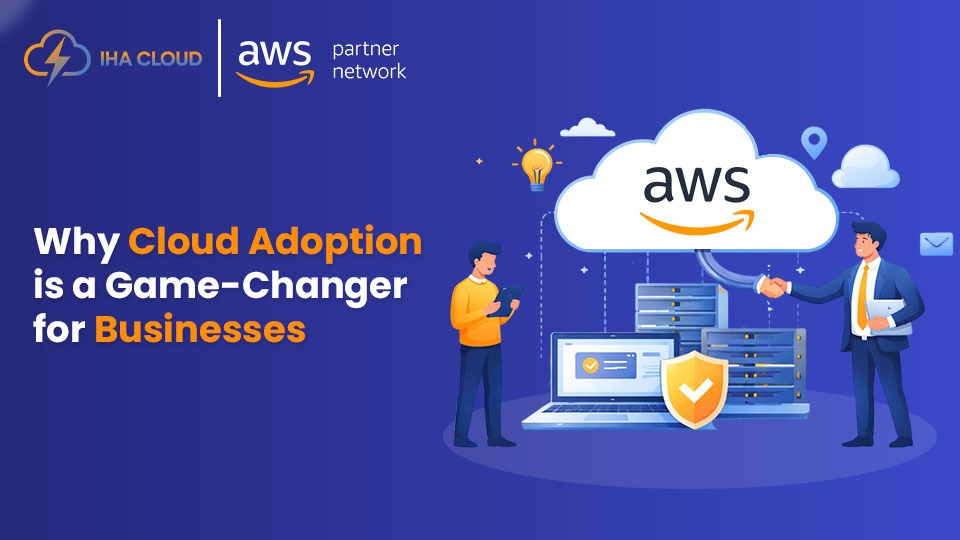
Why Cloud Adoption is a Game-Changer for Businesses

In today’s fast-paced digital world, businesses that embrace cloud technology are not just surviving—they are thriving. The shift from traditional on-premise infrastructure to cloud-based solutions has transformed how companies operate, scale, and innovate. But what exactly makes cloud adoption a game-changer? Let’s explore. 1. Scalability Without Limits One of the biggest advantages of cloud computing is scalability. Traditional IT setups require costly hardware upgrades and long deployment cycles. With the cloud, businesses can scale resources up or down in real-time based on demand. This means your applications can handle high traffic periods effortlessly, and you pay only for what you use—making IT more cost-efficient. 2. Enhanced Security and Compliance Security is often cited as a concern when moving to the cloud—but modern cloud providers invest heavily in security measures far beyond what most businesses can implement on their own. Features like data encryption, multi-factor authentication, and continuous monitoring help protect sensitive information. Additionally, cloud platforms often provide compliance certifications (ISO, GDPR, HIPAA), giving businesses peace of mind. 3. Cost Efficiency and Predictable Spending Cloud adoption eliminates the need for expensive upfront investments in servers, networking, and storage. Companies can instead opt for operational expenditure models, paying for what they consume. This financial flexibility allows organizations to allocate resources to strategic initiatives instead of routine IT maintenance, creating more room for growth and innovation. 4. Collaboration and Remote Work Made Easy Cloud-based tools enable teams to collaborate in real-time from anywhere in the world. Whether it’s sharing documents, managing projects, or deploying applications, the cloud ensures seamless communication and workflow efficiency. This has become essential in today’s remote and hybrid work environments, enabling teams to stay productive without physical constraints. 5. Faster Innovation and Time-to-Market With cloud infrastructure, businesses can deploy new applications and services faster than ever. Features like automation, AI integrations, and serverless computing allow organizations to experiment, iterate, and innovate without the delays associated with traditional IT. Faster time-to-market means staying ahead of competitors and responding quickly to customer needs. 6. Business Continuity and Disaster Recovery Unexpected downtime can cost businesses millions. Cloud solutions offer built-in disaster recovery and backup capabilities, ensuring data integrity and business continuity even in the face of failures or natural disasters. This reliability protects your brand reputation and reduces operational risks. Why Partner with IHA Cloud At IHA Cloud, we help businesses seamlessly migrate to the cloud, optimize their infrastructure, and leverage advanced technologies like AWS, DevOps automation, and serverless architectures. Our expert team ensures your cloud journey is smooth, secure, and tailored to your business goals. Whether you’re a startup looking to scale quickly or an enterprise seeking cost efficiency and innovation, IHA Cloud provides end-to-end cloud solutions that empower your organization to grow confidently. Final Thoughts Cloud adoption is no longer optional—it’s a strategic advantage. Companies that embrace cloud technology today can reduce costs, increase agility, enhance security, and innovate faster. The businesses that wait risk falling behind. By partnering with IHA Cloud, you gain not just a service provider, but a strategic ally in your digital transformation journey.

Why Cloud Adoption is a Game-Changer for Businesses Read More »

Designing Cloud Applications for High Availability

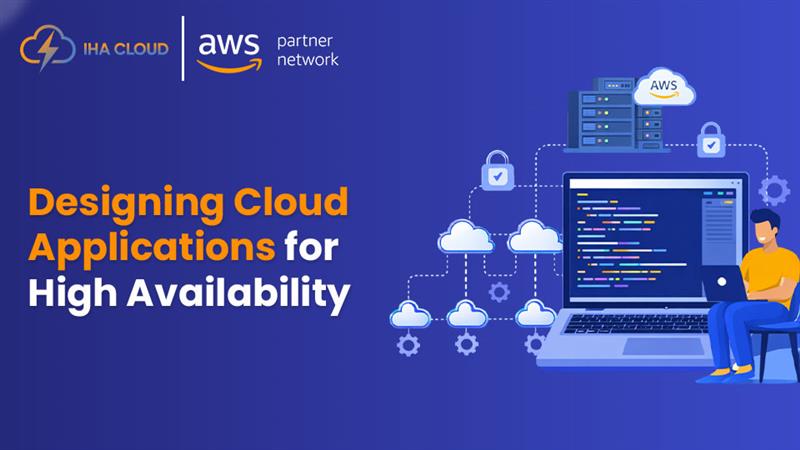
Designing Cloud Applications for High Availability

For modern digital products, availability is no longer a technical preference. It is a business requirement. Users expect applications to be accessible at all times, and even brief outages can lead to lost revenue and reduced trust.  Designing for high availability in the cloud ensures that applications remain accessible even when parts of the system fail. This requires thoughtful architecture, not just reliable infrastructure.  What High Availability Really Means  High availability does not mean that failures never happen. It means the system is designed to continue operating despite failures.  In cloud environments, this typically involves redundancy, fault isolation, and automated recovery. The goal is to minimize downtime and ensure consistent service for users.  Design for Failure from the Start  One of the core principles of cloud architecture is assuming that components will fail. Servers, networks, and even entire data centers can become unavailable.  High availability is achieved by distributing workloads across multiple resources so that a single failure does not impact the entire application. Designing with failure in mind leads to more resilient systems.  Use Redundancy at Every Layer  Redundancy is essential for high availability. This includes multiple application instances, replicated databases, and redundant networking components.  In the cloud, redundancy can be implemented across availability zones or regions. By spreading resources across isolated locations, applications can continue serving traffic even if one zone experiences issues.  Load Balancing for Consistent Performance  Load balancers play a critical role in high availability. They distribute incoming traffic across healthy application instances and automatically route traffic away from failed ones.  This ensures consistent performance for users and reduces the impact of individual instance failures.  Automate Scaling and Recovery  Traffic patterns are rarely predictable. Applications must be able to handle sudden spikes without manual intervention.  Auto scaling adjusts resources based on demand, while automated health checks and recovery mechanisms replace unhealthy components automatically. Together, these capabilities help maintain availability during both failures and traffic surges.  Design Databases for Availability  Databases are often the most critical part of an application. A single point of failure at the data layer can bring down the entire system.  High availability databases use replication, backups, and failover mechanisms to ensure data remains accessible. Choosing managed database services can simplify this process and reduce operational risk.  Monitor, Test, and Improve Continuously  High availability is not achieved once and forgotten. Continuous monitoring provides visibility into system health and performance.  Regular testing, including failover and recovery scenarios, helps identify weaknesses before they affect users. Continuous improvement ensures the architecture evolves with the application’s needs.  High Availability Is a Business Decision  Availability directly impacts customer satisfaction, brand reputation, and revenue. Investing in high availability is not just a technical decision but a strategic one.  Organizations that prioritize availability are better positioned to grow, retain customers, and respond to change with confidence.  How IHA Cloud Designs Highly Available Systems  At IHA Cloud, we design cloud architectures that prioritize availability, reliability, and scalability from the ground up.  We help organizations assess their current systems, identify risks, and implement architectures that minimize downtime. Our approach focuses on practical solutions that align with business goals and operational realities.  Closing Thoughts  High availability is not achieved through tools alone. It requires careful planning, disciplined execution, and ongoing attention.  Cloud platforms provide the building blocks, but thoughtful design turns those building blocks into reliable, resilient applications. 

Designing Cloud Applications for High Availability Read More »

Why Manual Deployments Are Risky for Growing Products

Why Manual Deployments Are Risky for Growing Products 

In the early stages of a product, manual deployments often feel simple and manageable. A developer logs into the server, pulls the latest code, runs a few commands, and the update goes live. For a small team, this may work for a while.  However, as a product grows, manual deployments start creating risks that directly affect stability, customer trust, and business growth.  What Manual Deployment Really Looks Like  Manual deployment usually means someone accesses production servers directly and performs steps by hand. These steps may not be documented clearly and often depend on the experience of a specific individual.  When deployments rely on people instead of systems, inconsistency becomes unavoidable.  Human Error Becomes a Business Risk  Even skilled engineers make mistakes. A wrong command, a missed configuration, or a deployment to the wrong environment can take an application down.  As the number of deployments increases, the chances of failure increase as well. What was once a minor inconvenience can quickly turn into customer facing downtime.  Environment Differences Create Hidden Problems  With manual deployments, development, testing, and production environments often differ in small but important ways. These differences cause issues that only appear after a release goes live.  This leads to delays, emergency fixes, and wasted engineering time trying to reproduce problems that should never have reached production.  Downtime Affects Revenue and Brand Trust  For growing products, availability is no longer optional. Users expect applications to be accessible at all times.  Manual deployments often require service restarts or maintenance windows. Even short outages can lead to lost users and reduced confidence in the product.  Scaling Makes Manual Processes Unmanageable  As infrastructure grows, deployments become more complex. Multiple servers, load balancers, and services need to be updated together.  Manual deployment does not scale with the product. What works on a single server becomes slow, error prone, and risky across multiple environments.  Rollbacks Are Slow and Uncertain  When a release fails, teams need to act quickly. Manual deployment rarely provides a clear and reliable rollback process.  Without proper version control and automation, rolling back a release can be just as risky as deploying it in the first place.  Security Risks Increase Over Time  Manual deployments often require direct server access. Credentials are shared, audit logs are missing, and there is little visibility into who deployed what and when.  For businesses handling customer data, this creates serious security and compliance concerns.  Why Automated Deployments Are Essential  Automated CI/CD pipelines replace uncertainty with consistency. Code is tested, built, and deployed in a repeatable way. Releases become predictable and easier to control.  Automation reduces risk, shortens release cycles, and allows teams to focus on improving the product instead of fixing deployment issues.  How IHA Cloud Supports Reliable Deployments  At IHA Cloud, we help growing companies move away from fragile manual deployments and build reliable, automated delivery pipelines.  We design and implement CI/CD pipelines tailored to your product and infrastructure. We ensure deployments are secure, auditable, and scalable, while minimizing downtime and operational overhead.  Our goal is to make deployments stable, predictable, and aligned with your business growth.  Closing Thoughts  Manual deployments may work when a product is small. They become a liability as the product gains users and revenue. 

Why Manual Deployments Are Risky for Growing Products  Read More »

How Startups Accidentally Overpay 30–50% on Cloud Costs

How Startups Accidentally Overpay 30–50% on Cloud Costs 

Cloud platforms help startups move faster, scale easily, and avoid heavy upfront infrastructure costs. However, many startups are surprised when their cloud bills keep increasing every month—often 30–50% higher than necessary.  This does not happen because startups make bad decisions. It usually happens because cloud environments grow quickly without clear cost control. This article explains the most common reasons in simple terms and shows how startups can avoid unnecessary spending.  Why Cloud Costs Increase Without Notice  Cloud pricing is based on usage. This is flexible, but it also means small inefficiencies can silently add up. Without proper planning and monitoring, cloud costs can grow faster than the business itself.  Below are the most common reasons startups overpay.  1. Using Bigger Resources Than Needed  Many startups choose larger servers or databases assuming it will improve performance. In reality, most applications use only a fraction of the allocated capacity.  Common situations include:  This results in paying for capacity that is never used.  2. No Clear Ownership of Cloud Costs  In early stages, cloud costs are often shared across teams without a clear owner. When no one actively tracks spending, costs increase unnoticed.  Typical issues include:  By the time the bill is reviewed, overspending has already occurred.  3. Resources Running When Not Needed  Cloud resources continue to generate costs as long as they are running.  This often includes:  These hidden costs slowly increase the monthly bill.  4. Not Using the Right Pricing Options  Cloud providers offer multiple pricing models designed to reduce costs. Many startups use default pricing without exploring cheaper options.  Examples include:  Without a pricing strategy, startups pay more than required.  5. Infrastructure Built for Speed, Not Efficiency  Startups move fast. Infrastructure is often designed to launch quickly, not to be cost-efficient in the long term.  Common problems include:  What works during early development may become expensive as usage increases.  The Business Impact of Overpaying for Cloud  Uncontrolled cloud spending affects more than just IT costs. It can:  Cloud should support growth, not slow it down.  How Startups Can Reduce Cloud Costs Safely  Reducing cloud costs does not mean reducing performance or security. It means using resources efficiently.  Effective cost optimization includes:  Many startups see immediate savings once these practices are applied.  How IHA Cloud Helps Startups Control Cloud Costs  At IHA Cloud, we help startups simplify cloud management and control costs without adding complexity.  We work with you to:  Our goal is to ensure your cloud environment grows efficiently with your business.  Final Thoughts  Startups do not overpay for cloud because cloud is expensive. They overpay because costs are not actively managed.  With the right approach and guidance, cloud remains flexible, scalable, and cost-effective—even during rapid growth.  If your cloud bills are increasing faster than expected, a simple review can uncover opportunities for immediate savings.  To review your cloud costs or discuss optimization strategies – Contact IHA Cloud  Our team is ready to help you build a cloud environment that supports growth without unnecessary spending.

How Startups Accidentally Overpay 30–50% on Cloud Costs  Read More »