
IHA Cloud

Cloud Services

Multi-Cloud vs Single Cloud

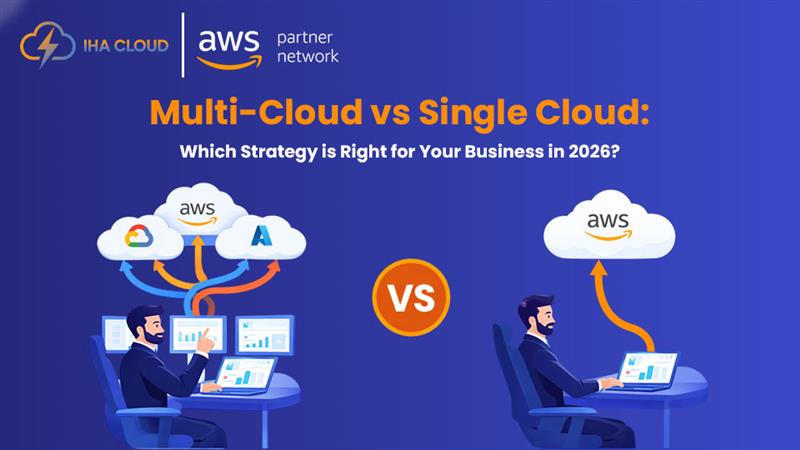
Multi-Cloud vs Single Cloud: Which Strategy is Right for Your Business in 2026?

Cloud strategy is no longer just an IT decision—it’s a core business choice that directly impacts cost, scalability, innovation, and risk management. In 2026, as cloud adoption accelerates and AI-driven workloads grow, businesses face a critical question: Should you rely on a single cloud provider, or adopt a multi-cloud strategy? The answer isn’t one-size-fits-all. It depends on your business maturity, technical capabilities, and long-term goals. This guide breaks it down in detail so you can make the right decision. Understanding the Basics What is Single Cloud? A single-cloud strategy means using one cloud provider (like AWS, Azure, or Google Cloud) for all your workloads. It focuses on: This approach is widely used by startups and growing businesses due to its ease of implementation. What is Multi-Cloud? A multi-cloud strategy involves using multiple cloud providers for different workloads or services. For example: This approach offers flexibility and reduces dependency on a single vendor. Single Cloud Strategy: Pros and Cons Advantages of Single Cloud 1. Simplicity and Ease of Management Working with one provider means: This reduces operational overhead significantly. 2. Lower Costs and Better Discounts Cloud providers offer: This makes single cloud more budget-friendly for most businesses. 3. Faster Team Productivity Your team only needs to learn: This leads to faster deployment and fewer errors. 4. Strong Integration Ecosystem Services within a single cloud: 5. Simplified Security & Compliance Managing security policies is easier when everything runs under one environment. ❌ Disadvantages of Single Cloud 1. Vendor Lock-In You become dependent on one provider’s: Switching later can be complex and costly. 2. Single Point of Failure If the provider faces downtime: 3. Limited Flexibility You may miss out on: Multi-Cloud Strategy: Pros and Cons Advantages of Multi-Cloud 1. No Vendor Lock-In You’re not tied to a single provider: 2. Best-of-Breed Services Each cloud excels in different areas: Multi-cloud lets you pick the best for each workload. 3. Improved Reliability & Disaster Recovery If one cloud fails: This ensures higher uptime and business continuity. 4. Performance Optimization You can deploy workloads: This reduces latency and improves user experience. 5. Compliance Flexibility Multi-cloud helps meet: ❌ Disadvantages of Multi-Cloud 1. High Complexity Managing multiple clouds means: This significantly increases operational challenges. 2. Higher Costs (If Not Managed Properly) Costs can increase due to: 3. Skill Gap Your team needs expertise in: This may require hiring or training. 4. Security Challenges More environments = 5. Monitoring & Visibility Issues Tracking performance across clouds can be difficult without advanced tools. Quick Comparison: Single Cloud vs Multi-Cloud Factor Single Cloud Multi-Cloud Complexity Low High Cost Lower Higher (initially) Vendor Lock-in High Low Flexibility Limited High Performance Optimization Moderate Excellent Disaster Recovery Limited Strong Security Management Simple Complex Scalability Good Excellent 👉 In short: Key Trends in 2026 1. Multi-Cloud is Becoming the Default 2. AI & Data Growth Driving Adoption Businesses are choosing multi-cloud to: 3. Rise of “Cloud 3.0” Modern strategies combine: This creates a highly flexible and intelligent infrastructure ecosystem. When Should You Choose Single Cloud? Single cloud is ideal if you are: 👉 Best for:Speed, simplicity, and cost control When Should You Choose Multi-Cloud? Multi-cloud makes sense if you are: 👉 Best for:Scalability, resilience, and performance optimization The Hybrid Reality: What Most Businesses Actually Do In 2026, many companies don’t choose one over the other—they adopt a hybrid approach: This balances: Common Mistake to Avoid ❌ Choosing multi-cloud just because it’s trending Multi-cloud only works if you have: Otherwise, it becomes:👉 “multi-complexity instead of multi-benefit” Final Thoughts: Which Strategy is Right for You? There’s no universal winner here. The smartest approach in 2026 is:👉 Align your cloud strategy with your business goals—not industry hype How IHA Cloud Helps You Choose the Right Strategy Choosing between single-cloud and multi-cloud is complex—but you don’t have to do it alone. IHA Cloud helps businesses: Whether you’re starting with a single cloud or scaling into a multi-cloud ecosystem, IHA Cloud ensures your cloud strategy is built for growth, performance, and cost efficiency. Frequently Asked Questions

Multi-Cloud vs Single Cloud: Which Strategy is Right for Your Business in 2026? Read More »

multi-cloud strategy for modern businesses

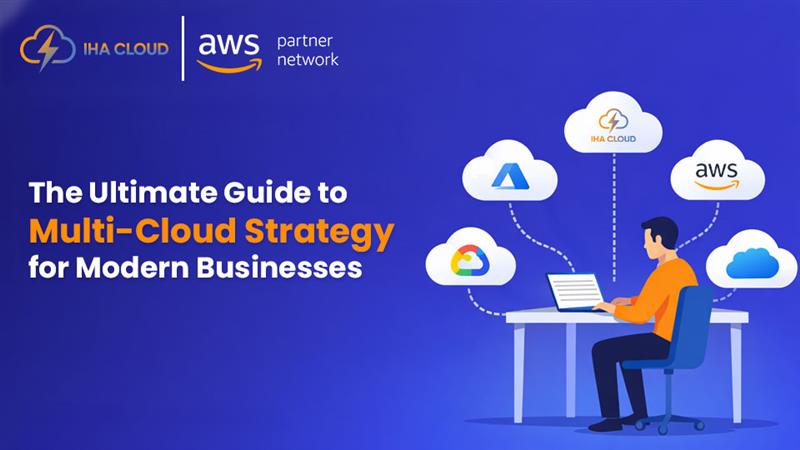
The Ultimate Guide to Multi-Cloud Strategy for Modern Businesses

As businesses scale and digital transformation accelerates, relying on a single cloud provider is no longer enough. Organizations today demand flexibility, resilience, and cost efficiency—this is where a multi-cloud strategy comes in. A multi-cloud approach allows businesses to use services from multiple cloud providers, reducing dependency on a single vendor while optimizing performance and costs. But how does it work, and is it the right choice for your business? Let’s break it down. What is a Multi-Cloud Strategy? A multi-cloud strategy involves using two or more cloud computing platforms—such as AWS, Azure, or Google Cloud—to run different workloads. Instead of putting all your applications and data in one cloud, you distribute them across multiple environments based on performance, pricing, or specific features. Why Businesses Are Adopting Multi-Cloud 1. Avoid Vendor Lock-In Relying on a single cloud provider can limit flexibility. Multi-cloud ensures you’re not tied to one vendor, giving you freedom to switch or scale as needed. 2. Improved Reliability & Uptime If one cloud provider experiences downtime, your applications can continue running on another platform—ensuring business continuity. 3. Cost Optimization Different providers offer different pricing models. Multi-cloud lets you choose the most cost-effective option for each workload. 4. Best-in-Class Services Each cloud provider has unique strengths. A multi-cloud strategy allows you to leverage the best tools from each platform. 5. Global Performance By distributing workloads across multiple regions and providers, you can improve application speed and user experience worldwide. Key Challenges of Multi-Cloud While powerful, multi-cloud isn’t without challenges: Multi-Cloud vs Hybrid Cloud Many people confuse multi-cloud with hybrid cloud, but they are different: Some organizations use both together for maximum flexibility. Best Practices for a Successful Multi-Cloud Strategy 1. Define Clear Goals Start with a clear understanding of why you need multi-cloud—cost savings, redundancy, or performance. 2. Choose the Right Workloads Not every application needs multi-cloud. Identify workloads that benefit most from distribution. 3. Implement Strong Security Policies Ensure consistent security practices across all platforms, including identity management and encryption. 4. Use Centralized Monitoring Tools Adopt tools that provide a unified view of performance, costs, and security across all clouds. 5. Automate Wherever Possible Automation reduces manual effort and minimizes errors in deployment and management. 6. Optimize Costs Continuously Monitor usage regularly and eliminate unused resources to avoid unnecessary spending. Tools That Support Multi-Cloud To manage multiple cloud environments effectively, businesses use tools like: These tools simplify deployment, scaling, and governance across clouds. Real-World Use Cases How IHA Cloud Helps You Succeed with Multi-Cloud Managing multi-cloud environments can be complex—but that’s where IHA Cloud makes a difference. With the right partner, you can unlock the full potential of multi-cloud without the headaches. Conclusion A multi-cloud strategy is no longer just a trend—it’s a necessity for modern businesses looking to stay competitive, resilient, and cost-efficient. While it comes with challenges, the benefits far outweigh the risks when implemented correctly. With proper planning, tools, and expert support, multi-cloud can transform how your business operates in the digital era.

The Ultimate Guide to Multi-Cloud Strategy for Modern Businesses Read More »

Optimizing Cloud Infrastructure for Remote Work and Collaboration

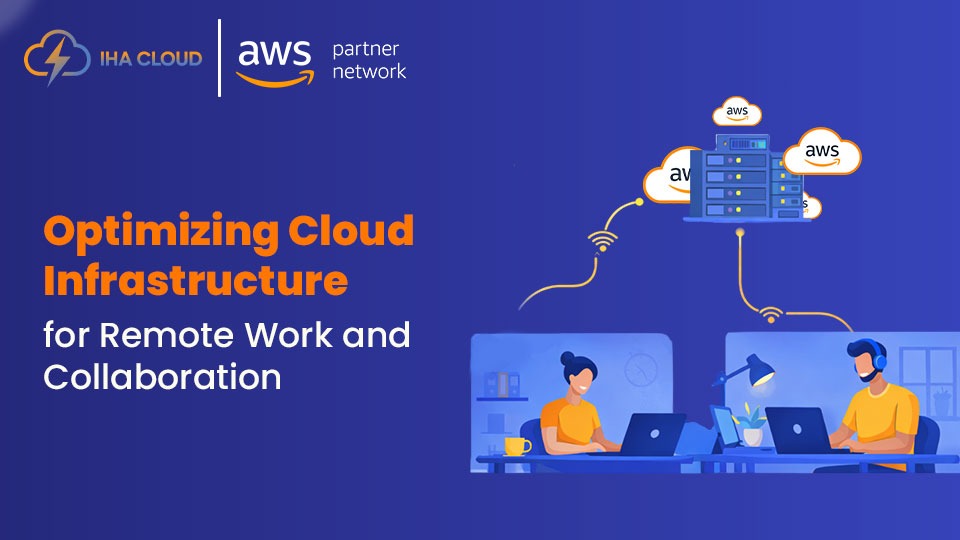
Optimizing Cloud Infrastructure for Remote Work and Collaboration 

The way we work has changed permanently. Remote and hybrid work models are now the norm, and businesses need cloud infrastructure that supports productivity, collaboration, and security from anywhere in the world. Optimizing your cloud setup is no longer optional—it’s essential for business continuity and growth.  1. Seamless Collaboration Tools Cloud platforms provide real-time collaboration tools like shared document editing, project management platforms, and virtual workspaces. Teams can communicate, share files, and manage projects without delays or bottlenecks, ensuring business operations run smoothly regardless of location.  2. Secure Remote Access With employees working from multiple locations, secure remote access is critical. Cloud solutions allow businesses to implement VPN alternatives, single sign-on (SSO), and multi-factor authentication, ensuring that only authorized personnel can access sensitive resources. 3. Scalable Cloud Storage Remote work generates massive amounts of data, from project files to video calls. Cloud infrastructure offers scalable storage solutions, ensuring teams have enough capacity to store, retrieve, and collaborate on files seamlessly without worrying about running out of space or expensive on-premise upgrades.  4. Optimized Performance and Latency Global teams need fast, reliable access to applications. Cloud providers offer Content Delivery Networks (CDNs) and edge computing, reducing latency and ensuring a smooth experience for employees across different geographies. This keeps productivity high and frustration low.  5. Automation for Productivity Automation in the cloud, from backup processes to workflow management, minimizes repetitive tasks and reduces errors. Employees can focus on higher-value work, while IT teams maintain infrastructure efficiently, even for distributed teams.  How IHA Cloud Can Help  IHA Cloud helps organizations design, optimize, and manage cloud environments tailored for remote work. Our solutions include:  Secure cloud infrastructure for remote teams  Collaboration and productivity tool deployment  Performance optimization and monitoring  Cost-efficient storage and automation solutions  By partnering with IHA Cloud, businesses can ensure their remote workforce is productive, secure, and empowered, no matter where they are.  Final Thoughts  Remote work isn’t going away, and cloud optimization is key to staying competitive. Organizations that invest in secure, scalable, and efficient cloud infrastructure will enhance collaboration, boost productivity, and maintain business continuity.  Empower your remote teams and optimize your cloud infrastructure with IHA Cloud. Contact us today to learn how we can transform your business operations for the modern workforce Connect With Cloud Expert

Optimizing Cloud Infrastructure for Remote Work and Collaboration  Read More »

Designing Cloud Applications for High Availability

Designing Cloud Applications for High Availability

For modern digital products, availability is no longer a technical preference. It is a business requirement. Users expect applications to be accessible at all times, and even brief outages can lead to lost revenue and reduced trust.  Designing for high availability in the cloud ensures that applications remain accessible even when parts of the system fail. This requires thoughtful architecture, not just reliable infrastructure.  What High Availability Really Means  High availability does not mean that failures never happen. It means the system is designed to continue operating despite failures.  In cloud environments, this typically involves redundancy, fault isolation, and automated recovery. The goal is to minimize downtime and ensure consistent service for users.  Design for Failure from the Start  One of the core principles of cloud architecture is assuming that components will fail. Servers, networks, and even entire data centers can become unavailable.  High availability is achieved by distributing workloads across multiple resources so that a single failure does not impact the entire application. Designing with failure in mind leads to more resilient systems.  Use Redundancy at Every Layer  Redundancy is essential for high availability. This includes multiple application instances, replicated databases, and redundant networking components.  In the cloud, redundancy can be implemented across availability zones or regions. By spreading resources across isolated locations, applications can continue serving traffic even if one zone experiences issues.  Load Balancing for Consistent Performance  Load balancers play a critical role in high availability. They distribute incoming traffic across healthy application instances and automatically route traffic away from failed ones.  This ensures consistent performance for users and reduces the impact of individual instance failures.  Automate Scaling and Recovery  Traffic patterns are rarely predictable. Applications must be able to handle sudden spikes without manual intervention.  Auto scaling adjusts resources based on demand, while automated health checks and recovery mechanisms replace unhealthy components automatically. Together, these capabilities help maintain availability during both failures and traffic surges.  Design Databases for Availability  Databases are often the most critical part of an application. A single point of failure at the data layer can bring down the entire system.  High availability databases use replication, backups, and failover mechanisms to ensure data remains accessible. Choosing managed database services can simplify this process and reduce operational risk.  Monitor, Test, and Improve Continuously  High availability is not achieved once and forgotten. Continuous monitoring provides visibility into system health and performance.  Regular testing, including failover and recovery scenarios, helps identify weaknesses before they affect users. Continuous improvement ensures the architecture evolves with the application’s needs.  High Availability Is a Business Decision  Availability directly impacts customer satisfaction, brand reputation, and revenue. Investing in high availability is not just a technical decision but a strategic one.  Organizations that prioritize availability are better positioned to grow, retain customers, and respond to change with confidence.  How IHA Cloud Designs Highly Available Systems  At IHA Cloud, we design cloud architectures that prioritize availability, reliability, and scalability from the ground up.  We help organizations assess their current systems, identify risks, and implement architectures that minimize downtime. Our approach focuses on practical solutions that align with business goals and operational realities.  Closing Thoughts  High availability is not achieved through tools alone. It requires careful planning, disciplined execution, and ongoing attention.  Cloud platforms provide the building blocks, but thoughtful design turns those building blocks into reliable, resilient applications. 

Designing Cloud Applications for High Availability Read More »

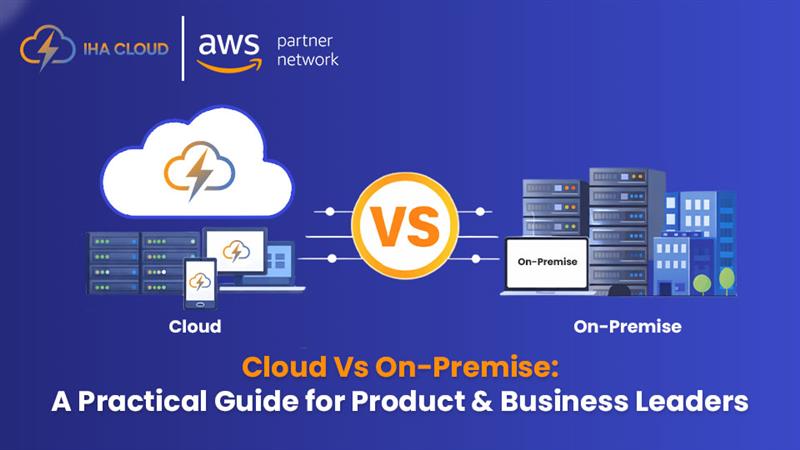
Cloud Vs On-Premise: A Practical Guide for Product & Business Leaders

For product owners, founders, CIOs, and business leaders, infrastructure decisions directly impact cost, scalability, security, and long-term growth. One of the most important choices organizations face is whether to adopt cloud infrastructure or continue operating on on-premise systems. There is no universal answer. The right approach depends on business objectives, operational priorities, regulatory requirements, and future expansion plans. This guide provides a clear, practical comparison to help decision-makers choose the infrastructure model that aligns with their business strategy. Understanding the Basics What Is On-Prem Infrastructure? On-premise (On-Prem) infrastructure refers to servers, storage, and networking equipment that are physically hosted within an organization’s own facility or data center. The organization is fully responsible for managing and maintaining the environment, including: This model offers complete control but requires significant investment and ongoing operational effort. What Is Cloud Infrastructure? Cloud infrastructure allows organizations to consume computing resources from providers such as AWS, Microsoft Azure, or Google Cloud. Instead of owning physical hardware, businesses pay for resources based on actual usage. Operational responsibilities such as availability, scalability, and infrastructure resilience are handled by the cloud provider or a managed services partner like IHA Cloud, allowing internal teams to focus on core business activities. Cloud Vs On-Prem: Real-World Comparison 1. Cost and Investment On-Prem Cloud For startups and growing organizations, cloud significantly reduces financial risk and avoids over-provisioning. 2. Scalability and Growth On-Prem Cloud Organizations with unpredictable or seasonal demand benefit from the flexibility cloud offers. 3. Security and Compliance On-Prem Cloud When properly designed and managed, cloud environments often meet or exceed traditional security standards. 4. Maintenance and Operations On-Prem Cloud Cloud enables organizations to shift focus from infrastructure management to business growth. 5. Speed and Innovation On-Prem Cloud Cloud platforms enable faster innovation and improved time-to-market. Choosing the Right Model Cloud Is Suitable If: On-Prem May Be Suitable If: Many organizations adopt a hybrid approach, combining cloud and on-prem infrastructure to balance control, flexibility, and performance. A Common Mistake Organizations Make The most frequent issue is not choosing cloud or on-prem, but making the decision without a defined strategy. Without proper architecture, security planning, and cost governance, cloud environments can become inefficient and expensive. Strategic planning and experienced guidance are essential for long-term success. How IHA Cloud Supports Your Infrastructure Strategy At IHA Cloud, we focus on aligning technology decisions with business outcomes. We do not promote cloud adoption by default. Instead, we evaluate what best fits your organization. Our services include: Whether you are starting your cloud journey, migrating existing workloads, or optimizing current infrastructure, we provide end-to-end guidance and support. Conclusion Cloud vs On-Premises is fundamentally a business decision, not just a technical one. The right infrastructure strategy can: If you are evaluating your infrastructure strategy or planning a transition, a structured discussion can help avoid costly missteps. Contact IHA Cloud To discuss your infrastructure requirements or request a consultation

Cloud Vs On-Premise: A Practical Guide for Product & Business Leaders Read More »

20 Best Cloud Service Providers in India

20 Best Cloud Service Providers in India (2025)

In today’s fast-paced digital world, businesses in India are increasingly moving to the cloud to improve efficiency, scalability, and security. Choosing the right cloud service provider is critical for seamless operations, data management, and digital transformation. From startups to large enterprises, every organization requires a reliable cloud partner that can support growth, innovation, and cost-effective solutions. India’s cloud market has grown rapidly, with numerous providers offering advanced computing, storage, networking, AI, and analytics solutions. Whether you are looking for enterprise-grade infrastructure, hybrid cloud capabilities, or developer-friendly platforms, the options are vast and varied. To help businesses make informed decisions, we have curated a list of the 20 Best Cloud Service Providers in India for 2025, highlighting their features, benefits, and ideal use cases. From IHA Cloud, which tops our list for its reliability and scalability, to global giants like AWS, Microsoft Azure, and Google Cloud, this guide covers the leading providers shaping India’s cloud ecosystem. Quick Comparison: 20 Best Cloud Service Providers in India No. Cloud Provider Key Features Ideal Use Cases 1 IHA Cloud AWS partner, DevOps, CI/CD, 24/7 support Web hosting, database migration, cost optimization 2 AWS India Global infrastructure, scalability, security Enterprise cloud migration, big data analytics, AI/ML apps 3 Microsoft Azure India Hybrid cloud, AI & analytics tools, multi-language support Cloud app development, hybrid IT, SaaS deployment 4 Google Cloud India AI/ML tools, big data analytics, high-speed global network Machine learning, big data, cloud-native apps, enterprise workloads 5 IBM Cloud India Hybrid cloud, AI integration, enterprise-grade security, global reach Enterprise apps, AI analytics, blockchain, hybrid IT 6 Oracle Cloud India High-performance compute, managed databases, strong security, ERP integration Database hosting, ERP deployment, cloud-native apps 7 VMware Cloud India Virtualization, hybrid cloud, enterprise security, disaster recovery Virtual machines, hybrid IT, workload migration 8 Alibaba Cloud India AI & big data, secure infrastructure, scalable, cost-effective E-commerce platforms, big data analytics, AI apps 9 DigitalOcean India Developer-friendly, scalable droplets, simple deployment, affordable Web apps, cloud-native apps, containerized workloads 10 Linode India Predictable pricing, high-performance VMs, security, developer-friendly Web hosting, app development, cloud infrastructure for SMBs 11 Rackspace Technology India Multi-cloud management, expert support, security, scalable Managed hosting, enterprise migration, multi-cloud strategy 12 Salesforce Cloud India CRM-focused, AI-powered insights, integration capabilities, scalable Customer management, marketing automation, enterprise SaaS 13 Zoho Cloud India Productivity suite, seamless integrations, secure, cost-effective Business management, CRM, team collaboration 14 VMware vCloud India Virtualization, hybrid cloud, security, disaster recovery Hybrid IT, virtual machines, enterprise workloads 15 Netmagic Cloud (NTT Ltd.) Managed services, secure, scalable, high availability Enterprise hosting, migration, disaster recovery 16 Huawei Cloud India AI & big data, scalable, secure, innovative Cloud-native development, AI apps, big data analytics 17 TCS Cloud India End-to-end cloud solutions, hybrid/multi-cloud, security, governance Cloud migration, hybrid IT, digital transformation 18 Wipro Cloud India Cloud advisory, modernization, managed services, multi-cloud App modernization, enterprise migration, multi-cloud strategy 19 HCL Technologies Cloud India Cloud consulting, AI automation, hybrid/multi-cloud, security Hybrid IT, digital transformation, AI-driven cloud management 20 Tech Mahindra Cloud India Industry-specific solutions, cloud migration, AI & IoT integration Industry apps, digital transformation, managed cloud services Here is the detailed description of the 20 Best Cloud Service Providers in India 1. IHA Cloud – Best Cloud Service Provider in India IHA Cloud is one of India’s fastest-growing cloud service providers, offering reliable, scalable, and secure cloud solutions for businesses of all sizes. It focuses on providing enterprise-grade infrastructure while maintaining cost-effectiveness for startups and SMEs. Key Features: Use Cases: Hosting enterprise applications, website hosting, virtual desktops, and cloud storage solutions. 2. Amazon Web Services (AWS) India AWS is a global cloud leader with a strong presence in India. It offers a wide range of services including computing power, storage, databases, and AI/ML solutions. AWS is known for its reliability, innovation, and global reach. Key Features: Use Cases: Enterprise cloud migration, big data analytics, AI-powered applications, and e-commerce platforms. 3. Microsoft Azure India Microsoft Azure is a preferred choice for businesses looking to integrate cloud solutions with Microsoft products like Office 365, Dynamics 365, and Teams. Azure provides hybrid cloud solutions for seamless integration with on-premises infrastructure. Key Features: Use Cases: Cloud app development, hybrid IT solutions, data analytics, and enterprise SaaS deployment. 4. Google Cloud Platform (GCP) India GCP provides robust cloud infrastructure with advanced AI, ML, and data analytics tools. It focuses on delivering high-performance computing resources for startups and large enterprises alike. Key Features: Use Cases: Machine learning projects, big data analytics, cloud-native application development, and enterprise workloads. 5. IBM Cloud India IBM Cloud offers enterprise-focused cloud solutions with a strong emphasis on hybrid cloud and AI-powered services. It is ideal for large organizations looking for secure, scalable, and intelligent cloud infrastructure. Key Features: Use Cases: Enterprise applications, AI-driven analytics, blockchain solutions, and hybrid IT environments. 6. Oracle Cloud India Oracle Cloud is known for its database-as-a-service offerings and robust cloud infrastructure. It is ideal for enterprises that rely heavily on databases and ERP solutions. Key Features: Use Cases: Database hosting, ERP deployment, cloud-native application development, and data analytics. 7. VMware Cloud India VMware Cloud specializes in virtualization and hybrid cloud solutions. It enables businesses to migrate and manage workloads securely across private and public cloud environments. Key Features: Use Cases: Virtual machine hosting, hybrid IT infrastructure, enterprise workload migration, and cloud resource optimization. 8. Alibaba Cloud India Alibaba Cloud is a fast-growing provider in India, offering a range of cloud services including computing, storage, networking, and security solutions. It is particularly popular among e-commerce and tech startups. Key Features: Use Cases: E-commerce platforms, big data analytics, AI-powered applications, and scalable web hosting. 9. DigitalOcean India DigitalOcean is a developer-friendly cloud provider that focuses on simplicity, scalability, and affordability. It’s widely used by startups and small to medium-sized businesses for deploying cloud applications quickly. Key Features: Use Cases: Hosting web applications, cloud-native apps, developer environments, and containerized workloads. 10. Linode India Linode is a reliable and cost-effective cloud platform that offers virtual servers, storage solutions, and networking services for businesses

20 Best Cloud Service Providers in India (2025) Read More »