IHA Cloud

Use Cases

multi-cloud strategy for modern businesses

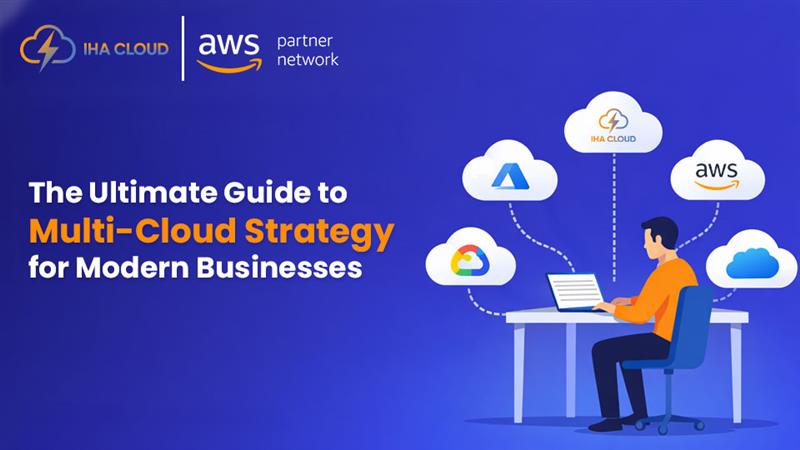
The Ultimate Guide to Multi-Cloud Strategy for Modern Businesses

As businesses scale and digital transformation accelerates, relying on a single cloud provider is no longer enough. Organizations today demand flexibility, resilience, and cost efficiency—this is where a multi-cloud strategy comes in. A multi-cloud approach allows businesses to use services from multiple cloud providers, reducing dependency on a single vendor while optimizing performance and costs. But how does it work, and is it the right choice for your business? Let’s break it down. What is a Multi-Cloud Strategy? A multi-cloud strategy involves using two or more cloud computing platforms—such as AWS, Azure, or Google Cloud—to run different workloads. Instead of putting all your applications and data in one cloud, you distribute them across multiple environments based on performance, pricing, or specific features. Why Businesses Are Adopting Multi-Cloud 1. Avoid Vendor Lock-In Relying on a single cloud provider can limit flexibility. Multi-cloud ensures you’re not tied to one vendor, giving you freedom to switch or scale as needed. 2. Improved Reliability & Uptime If one cloud provider experiences downtime, your applications can continue running on another platform—ensuring business continuity. 3. Cost Optimization Different providers offer different pricing models. Multi-cloud lets you choose the most cost-effective option for each workload. 4. Best-in-Class Services Each cloud provider has unique strengths. A multi-cloud strategy allows you to leverage the best tools from each platform. 5. Global Performance By distributing workloads across multiple regions and providers, you can improve application speed and user experience worldwide. Key Challenges of Multi-Cloud While powerful, multi-cloud isn’t without challenges: Multi-Cloud vs Hybrid Cloud Many people confuse multi-cloud with hybrid cloud, but they are different: Some organizations use both together for maximum flexibility. Best Practices for a Successful Multi-Cloud Strategy 1. Define Clear Goals Start with a clear understanding of why you need multi-cloud—cost savings, redundancy, or performance. 2. Choose the Right Workloads Not every application needs multi-cloud. Identify workloads that benefit most from distribution. 3. Implement Strong Security Policies Ensure consistent security practices across all platforms, including identity management and encryption. 4. Use Centralized Monitoring Tools Adopt tools that provide a unified view of performance, costs, and security across all clouds. 5. Automate Wherever Possible Automation reduces manual effort and minimizes errors in deployment and management. 6. Optimize Costs Continuously Monitor usage regularly and eliminate unused resources to avoid unnecessary spending. Tools That Support Multi-Cloud To manage multiple cloud environments effectively, businesses use tools like: These tools simplify deployment, scaling, and governance across clouds. Real-World Use Cases How IHA Cloud Helps You Succeed with Multi-Cloud Managing multi-cloud environments can be complex—but that’s where IHA Cloud makes a difference. With the right partner, you can unlock the full potential of multi-cloud without the headaches. Conclusion A multi-cloud strategy is no longer just a trend—it’s a necessity for modern businesses looking to stay competitive, resilient, and cost-efficient. While it comes with challenges, the benefits far outweigh the risks when implemented correctly. With proper planning, tools, and expert support, multi-cloud can transform how your business operates in the digital era.

The Ultimate Guide to Multi-Cloud Strategy for Modern Businesses Read More »

Top Cloud Challenges Businesses Face—and How IHA Cloud Solves Them

Top Cloud Challenges Businesses Face and How IHA Cloud Solves Them

Cloud computing has become the backbone of modern businesses, enabling flexibility, scalability, and innovation. But while the cloud offers immense benefits, it also comes with its own set of challenges that can slow down growth, increase costs, and impact performance. The real question isn’t whether to use the cloud—it’s how to use it efficiently. That’s where IHA Cloud comes in, helping businesses overcome common cloud challenges with smart, scalable, and cost-effective solutions. 🚧 1. Unpredictable and Rising Cloud Costs One of the biggest frustrations for businesses is the lack of cost visibility. Many organizations end up paying for unused resources, over-provisioned servers, or inefficient configurations. How IHA Cloud solves it: 👉 Result: Lower cloud bills without compromising performance ⚙️ 2. Complex Infrastructure Management Managing cloud infrastructure can quickly become overwhelming—especially as systems grow. Multiple services, configurations, and dependencies create complexity that slows down teams. How IHA Cloud solves it: 👉 Result: Less complexity, more productivity 🚀 3. Performance and Downtime Issues Slow applications or unexpected downtime can directly impact revenue and customer trust. Many businesses struggle to maintain consistent performance under varying workloads. How IHA Cloud solves it: 👉 Result: Reliable performance and better user experience 📈 4. Scalability Challenges Businesses often face difficulties when scaling—either they overpay for unused capacity or struggle during traffic spikes. How IHA Cloud solves it: 👉 Result: Smooth scaling without overpaying 🔐 5. Security and Compliance Risks With increasing cyber threats, securing cloud environments has become more critical than ever. Misconfigurations and lack of monitoring can expose sensitive data. How IHA Cloud solves it: 👉 Result: Stronger security with minimal risk ⚡ 6. Slow Development and Deployment Cycles Traditional deployment processes can delay product updates and innovation. Businesses need faster, more reliable ways to release features. How IHA Cloud solves it: 👉 Result: Accelerated development and time-to-market 🤖 7. Lack of Automation and Intelligence Many cloud setups still rely on manual processes, leading to inefficiencies and human errors. How IHA Cloud solves it: 👉 Result: Smarter, more efficient infrastructure 🌐 Why Businesses Choose IHA Cloud IHA Cloud doesn’t just solve cloud problems—it transforms how businesses use the cloud. With a focus on performance, security, scalability, and cost optimization, it provides a complete solution for modern infrastructure needs. ✔ Reduced operational complexity✔ Improved performance and reliability✔ Better cost control✔ Faster innovation with DevOps✔ Enhanced security and monitoring 💡 Final Thoughts Cloud challenges are real—but they’re not impossible to solve. With the right strategy and partner, businesses can turn these challenges into opportunities for growth. IHA Cloud empowers organizations to overcome cloud limitations and build infrastructure that is efficient, scalable, and future-ready.

Top Cloud Challenges Businesses Face and How IHA Cloud Solves Them Read More »

How IHA Cloud Helps Startups Build Scalable Systems Without High Cloud Costs

How IHA Cloud Helps Startups Build Scalable Systems Without High Cloud Costs

For startups, building a product is just the beginning. The real challenge is scaling it efficiently without burning through budgets. Many startups move to the cloud expecting flexibility and savings—but often end up facing unexpected costs, performance issues, and complex infrastructure management. That’s where IHA Cloud makes a difference—helping startups build scalable, high-performing systems while keeping cloud costs under control. 🚀 The Startup Challenge: Scale Fast, Spend Smart Startups operate in a high-pressure environment: Balancing performance with cost is tough. Over-provisioning leads to wasted spend, while under-provisioning causes crashes and poor user experience. IHA Cloud bridges this gap by offering smart, scalable infrastructure tailored for startup growth. 📈 Scalability That Grows With You Your infrastructure should never hold you back. Whether you’re launching your MVP or scaling to thousands of users, IHA Cloud ensures your systems are always ready. With flexible cloud architecture, startups can: This means you only use what you need—no overpaying, no performance compromise. 💰 Cost Optimization Without the Guesswork One of the biggest pain points for startups is unpredictable cloud billing. Without proper optimization, costs can spiral quickly. IHA Cloud helps startups stay in control by: Instead of worrying about rising bills, startups can focus on building and growing their product. ⚙️ Simplified DevOps for Faster Development Startups need speed. But managing infrastructure manually can slow down development cycles. IHA Cloud enables: This allows small teams to move faster, experiment more, and deliver better products—without needing a large DevOps team. 🔐 Secure and Reliable from Day One Security is often overlooked in early-stage startups—but it shouldn’t be. IHA Cloud ensures that your systems are: This gives startups a strong foundation to build trust with users and investors alike. 🌐 Built for Modern Startup Needs Whether you’re building: IHA Cloud adapts to your unique requirements—ensuring performance, flexibility, and cost-efficiency at every stage. 💡 Why Startups Choose IHA Cloud Startups choose IHA Cloud because it delivers what they need most: ✔ Scalable infrastructure that grows with demand✔ Cost-efficient cloud management✔ Faster development with DevOps support✔ Secure and reliable systems✔ Reduced operational complexity 🚀 Final Thoughts Startups don’t fail because of bad ideas—they often fail due to poor scalability and uncontrolled costs. With IHA Cloud, startups get the right balance of performance, flexibility, and cost control, enabling them to scale confidently without financial stress. Build smart. Scale fast. Spend wisely—with IHA Cloud.

How IHA Cloud Helps Startups Build Scalable Systems Without High Cloud Costs Read More »