As businesses scale and digital transformation accelerates, relying on a single cloud provider is no longer enough. Organizations today demand flexibility, resilience, and cost efficiency—this is where a multi-cloud strategy comes in.
A multi-cloud approach allows businesses to use services from multiple cloud providers, reducing dependency on a single vendor while optimizing performance and costs. But how does it work, and is it the right choice for your business? Let’s break it down.
What is a Multi-Cloud Strategy?
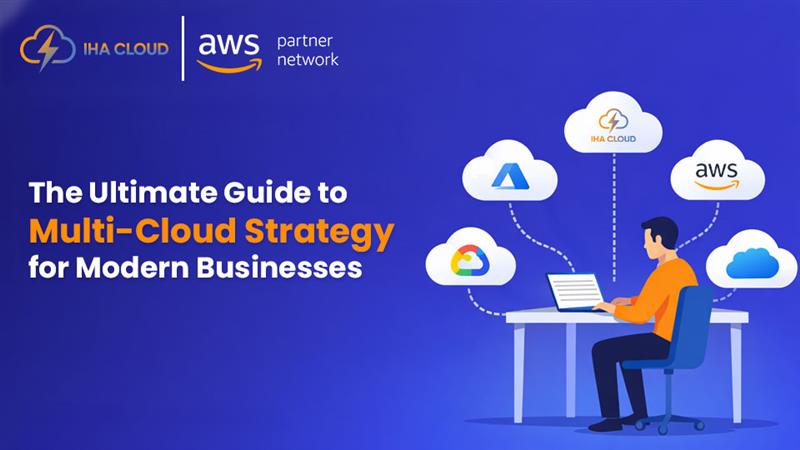
A multi-cloud strategy involves using two or more cloud computing platforms—such as AWS, Azure, or Google Cloud—to run different workloads.
Instead of putting all your applications and data in one cloud, you distribute them across multiple environments based on performance, pricing, or specific features.
Why Businesses Are Adopting Multi-Cloud
1. Avoid Vendor Lock-In
Relying on a single cloud provider can limit flexibility. Multi-cloud ensures you’re not tied to one vendor, giving you freedom to switch or scale as needed.
2. Improved Reliability & Uptime
If one cloud provider experiences downtime, your applications can continue running on another platform—ensuring business continuity.
3. Cost Optimization
Different providers offer different pricing models. Multi-cloud lets you choose the most cost-effective option for each workload.
4. Best-in-Class Services
Each cloud provider has unique strengths. A multi-cloud strategy allows you to leverage the best tools from each platform.
5. Global Performance
By distributing workloads across multiple regions and providers, you can improve application speed and user experience worldwide.
Key Challenges of Multi-Cloud
While powerful, multi-cloud isn’t without challenges:
- Complex Management: Handling multiple platforms can increase operational complexity
- Security Risks: More environments mean more potential vulnerabilities
- Integration Issues: Ensuring seamless communication between clouds can be difficult
- Higher Skill Requirements: Teams need expertise across multiple platforms
Multi-Cloud vs Hybrid Cloud
Many people confuse multi-cloud with hybrid cloud, but they are different:
- Multi-Cloud: Using multiple cloud providers
- Hybrid Cloud: Combining on-premise infrastructure with cloud environments
Some organizations use both together for maximum flexibility.
Best Practices for a Successful Multi-Cloud Strategy
1. Define Clear Goals
Start with a clear understanding of why you need multi-cloud—cost savings, redundancy, or performance.
2. Choose the Right Workloads
Not every application needs multi-cloud. Identify workloads that benefit most from distribution.
3. Implement Strong Security Policies
Ensure consistent security practices across all platforms, including identity management and encryption.
4. Use Centralized Monitoring Tools
Adopt tools that provide a unified view of performance, costs, and security across all clouds.
5. Automate Wherever Possible
Automation reduces manual effort and minimizes errors in deployment and management.
6. Optimize Costs Continuously
Monitor usage regularly and eliminate unused resources to avoid unnecessary spending.
Tools That Support Multi-Cloud
To manage multiple cloud environments effectively, businesses use tools like:
- Kubernetes for container orchestration
- Terraform for infrastructure as code
- Cloud management platforms for unified monitoring
These tools simplify deployment, scaling, and governance across clouds.
Real-World Use Cases
- E-commerce: Ensuring uptime during high traffic by distributing workloads
- SaaS Companies: Using different providers for development, testing, and production
- Enterprises: Meeting compliance requirements by storing data across regions
How IHA Cloud Helps You Succeed with Multi-Cloud
Managing multi-cloud environments can be complex—but that’s where IHA Cloud makes a difference.
- Helps you design a tailored multi-cloud architecture
- Optimizes cloud costs without compromising performance
- Ensures security and compliance across platforms
- Provides continuous monitoring and support
With the right partner, you can unlock the full potential of multi-cloud without the headaches.
Conclusion
A multi-cloud strategy is no longer just a trend—it’s a necessity for modern businesses looking to stay competitive, resilient, and cost-efficient.
While it comes with challenges, the benefits far outweigh the risks when implemented correctly. With proper planning, tools, and expert support, multi-cloud can transform how your business operates in the digital era.