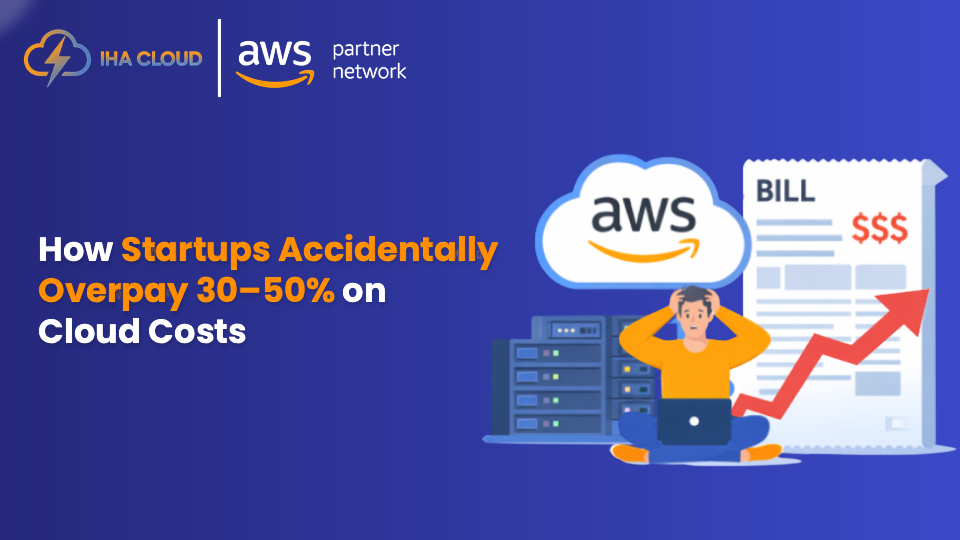
Cloud platforms help startups move faster, scale easily, and avoid heavy upfront infrastructure costs. However, many startups are surprised when their cloud bills keep increasing every month—often 30–50% higher than necessary.
This does not happen because startups make bad decisions. It usually happens because cloud environments grow quickly without clear cost control. This article explains the most common reasons in simple terms and shows how startups can avoid unnecessary spending.
Why Cloud Costs Increase Without Notice
Cloud pricing is based on usage. This is flexible, but it also means small inefficiencies can silently add up. Without proper planning and monitoring, cloud costs can grow faster than the business itself.
Below are the most common reasons startups overpay.
1. Using Bigger Resources Than Needed
Many startups choose larger servers or databases assuming it will improve performance. In reality, most applications use only a fraction of the allocated capacity.
Common situations include:
- Large servers running low-traffic applications
- Databases sized for future growth instead of current usage
- No regular review of resource utilization
This results in paying for capacity that is never used.
2. No Clear Ownership of Cloud Costs
In early stages, cloud costs are often shared across teams without a clear owner. When no one actively tracks spending, costs increase unnoticed.
Typical issues include:
- No monthly cloud budget
- No alerts for sudden cost spikes
- Engineering teams unaware of cost impact
By the time the bill is reviewed, overspending has already occurred.
3. Resources Running When Not Needed
Cloud resources continue to generate costs as long as they are running.
This often includes:
- Development or testing systems running all day and night
- Unused storage volumes and backups
- Old resources created for temporary use and never removed
These hidden costs slowly increase the monthly bill.
4. Not Using the Right Pricing Options
Cloud providers offer multiple pricing models designed to reduce costs. Many startups use default pricing without exploring cheaper options.
Examples include:
- Not using reserved or committed plans
- Paying full price for predictable workloads
- Missing discounts available for long-term usage
Without a pricing strategy, startups pay more than required.
5. Infrastructure Built for Speed, Not Efficiency
Startups move fast. Infrastructure is often designed to launch quickly, not to be cost-efficient in the long term.
Common problems include:
- Always running systems sized for peak traffic
- No automatic scaling based on real demand
- Architecture not reviewed after growth
What works during early development may become expensive as usage increases.

The Business Impact of Overpaying for Cloud
Uncontrolled cloud spending affects more than just IT costs. It can:
- Reduce startup runway
- Limit investment in product development
- Raise concerns during investor reviews
- Make scaling financially challenging
Cloud should support growth, not slow it down.
How Startups Can Reduce Cloud Costs Safely
Reducing cloud costs does not mean reducing performance or security. It means using resources efficiently.
Effective cost optimization includes:
- Right-sizing infrastructure based on actual usage
- Automatically stopping unused resources
- Monitoring costs in real time
- Choosing the correct pricing models
- Reviewing architecture regularly
Many startups see immediate savings once these practices are applied.
How IHA Cloud Helps Startups Control Cloud Costs
At IHA Cloud, we help startups simplify cloud management and control costs without adding complexity.
We work with you to:
- Review current cloud usage and spending
- Identify unnecessary or oversized resources
- Design cost-efficient cloud architecture
- Implement monitoring and cost controls
- Provide ongoing cloud and DevOps support
Our goal is to ensure your cloud environment grows efficiently with your business.
Final Thoughts
Startups do not overpay for cloud because cloud is expensive. They overpay because costs are not actively managed.
With the right approach and guidance, cloud remains flexible, scalable, and cost-effective—even during rapid growth.
If your cloud bills are increasing faster than expected, a simple review can uncover opportunities for immediate savings.
To review your cloud costs or discuss optimization strategies – Contact IHA Cloud
Our team is ready to help you build a cloud environment that supports growth without unnecessary spending.