If your team still deploys by manually copying files to a server or running a script someone half-remembers, every release carries risk that does not need to exist. A CI/CD pipeline removes the guesswork — code is tested, built, and deployed the same way every time.
What CI/CD Actually Means
- Continuous Integration — every code change is automatically built and tested before it is merged
- Continuous Deployment — code that passes those checks is automatically deployed, without a person manually pushing it
Together, they mean fewer surprises in production and faster releases, because deployment is no longer a special event that requires careful coordination.
Why GitHub Actions and AWS
GitHub Actions runs your pipeline directly from your repository, with no separate CI server to maintain. Paired with AWS, it can build, test, and deploy directly to your infrastructure.
- No separate CI/CD infrastructure to provision or maintain
- Native integration with GitHub repositories, pull requests, and branch protection
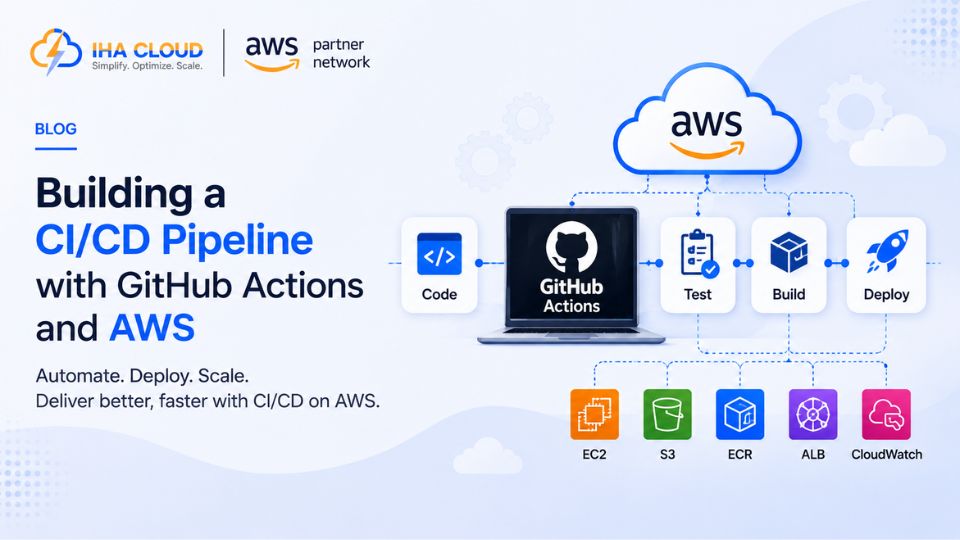
- Deploys via AWS Systems Manager (SSM), S3, ECS, or Elastic Beanstalk depending on your architecture
A Typical Pipeline Structure
- Trigger — a push to a specific branch, or a pull request
- Build — install dependencies, compile, and run the build process
- Test — run automated tests, and stop the pipeline if anything fails
- Security Scan — scan dependencies and containers for known vulnerabilities before deployment
- Deploy — push the build to the target environment, typically dev first, then production after approval
Setting Up the AWS Side
- Create a dedicated IAM user or role scoped only to the permissions the pipeline needs
- Store AWS credentials as encrypted GitHub Secrets, never in the code
- Use separate deployment targets for development and production environments
- Add a manual approval step before production deployments, even in a fully automated pipeline
Common Mistakes
- Giving the CI/CD IAM role broad administrative permissions instead of scoping it tightly
- Deploying directly to production with no staging environment to catch issues first
- Skipping automated tests because “the pipeline still works” — until it deploys a bug at scale
- Not setting up deployment notifications, so failures go unnoticed until someone checks manually
The Payoff
Once a pipeline is in place, deployments stop being an event people plan around and become something that happens dozens of times a week without anyone thinking twice. That shift — from risky and infrequent to routine and safe — is the entire point of CI/CD.