Cloud strategy is no longer just an IT decision—it’s a core business choice that directly impacts cost, scalability, innovation, and risk management. In 2026, as cloud adoption accelerates and AI-driven workloads grow, businesses face a critical question:
Should you rely on a single cloud provider, or adopt a multi-cloud strategy?
The answer isn’t one-size-fits-all. It depends on your business maturity, technical capabilities, and long-term goals. This guide breaks it down in detail so you can make the right decision.
Understanding the Basics
What is Single Cloud?
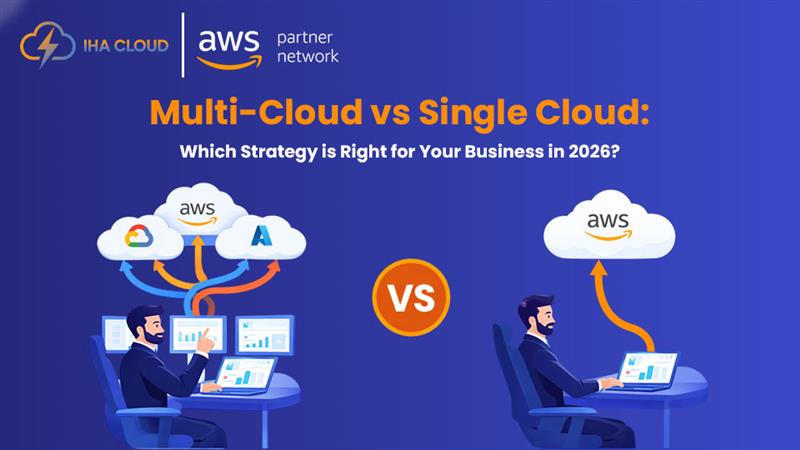
A single-cloud strategy means using one cloud provider (like AWS, Azure, or Google Cloud) for all your workloads.
It focuses on:
- Simplicity
- Centralized management
- Cost efficiency
This approach is widely used by startups and growing businesses due to its ease of implementation.
What is Multi-Cloud?
A multi-cloud strategy involves using multiple cloud providers for different workloads or services.
For example:
- Hosting backend on one cloud
- Running analytics on another
- Using a third for disaster recovery
This approach offers flexibility and reduces dependency on a single vendor.
Single Cloud Strategy: Pros and Cons
Advantages of Single Cloud
1. Simplicity and Ease of Management
Working with one provider means:
- One dashboard
- One billing system
- One support ecosystem
This reduces operational overhead significantly.
2. Lower Costs and Better Discounts
Cloud providers offer:
- Volume-based pricing
- Reserved instance discounts
This makes single cloud more budget-friendly for most businesses.
3. Faster Team Productivity
Your team only needs to learn:
- One platform
- One set of tools
This leads to faster deployment and fewer errors.
4. Strong Integration Ecosystem
Services within a single cloud:
- Work seamlessly together
- Require minimal integration effort
5. Simplified Security & Compliance
Managing security policies is easier when everything runs under one environment.
❌ Disadvantages of Single Cloud
1. Vendor Lock-In
You become dependent on one provider’s:
- Pricing
- Features
- Limitations
Switching later can be complex and costly.
2. Single Point of Failure
If the provider faces downtime:
- Your entire system may be affected
3. Limited Flexibility
You may miss out on:
- Specialized tools from other providers
- Better pricing alternatives
Multi-Cloud Strategy: Pros and Cons
Advantages of Multi-Cloud
1. No Vendor Lock-In
You’re not tied to a single provider:
- Better negotiation power
- Easier migration
2. Best-of-Breed Services
Each cloud excels in different areas:
- AI tools
- Data analytics
- Storage solutions
Multi-cloud lets you pick the best for each workload.
3. Improved Reliability & Disaster Recovery
If one cloud fails:
- Others can take over
This ensures higher uptime and business continuity.
4. Performance Optimization
You can deploy workloads:
- Closer to users
- In different geographic regions
This reduces latency and improves user experience.
5. Compliance Flexibility
Multi-cloud helps meet:
- Data residency requirements
- Regulatory compliance
❌ Disadvantages of Multi-Cloud
1. High Complexity
Managing multiple clouds means:
- Multiple dashboards
- Different APIs
- Complex integrations
This significantly increases operational challenges.
2. Higher Costs (If Not Managed Properly)
Costs can increase due to:
- Data transfer fees
- Duplicate tools
- Lack of volume discounts
3. Skill Gap
Your team needs expertise in:
- Multiple cloud platforms
This may require hiring or training.
4. Security Challenges
More environments =
- Larger attack surface
- Complex security policies
5. Monitoring & Visibility Issues
Tracking performance across clouds can be difficult without advanced tools.
Quick Comparison: Single Cloud vs Multi-Cloud
| Factor | Single Cloud | Multi-Cloud |
|---|---|---|
| Complexity | Low | High |
| Cost | Lower | Higher (initially) |
| Vendor Lock-in | High | Low |
| Flexibility | Limited | High |
| Performance Optimization | Moderate | Excellent |
| Disaster Recovery | Limited | Strong |
| Security Management | Simple | Complex |
| Scalability | Good | Excellent |
👉 In short:
- Single cloud = Simplicity & cost efficiency
- Multi-cloud = Flexibility & resilience
Key Trends in 2026
1. Multi-Cloud is Becoming the Default
- Nearly 89% of enterprises use multi-cloud today
2. AI & Data Growth Driving Adoption
Businesses are choosing multi-cloud to:
- Handle massive data workloads
- Optimize AI infrastructure
3. Rise of “Cloud 3.0”
Modern strategies combine:
- Multi-cloud
- Hybrid cloud
- Edge computing
This creates a highly flexible and intelligent infrastructure ecosystem.
When Should You Choose Single Cloud?
Single cloud is ideal if you are:
- A startup or SMB
- Working with limited budgets
- Lacking advanced DevOps expertise
- Running simple or moderately complex applications
👉 Best for:
Speed, simplicity, and cost control
When Should You Choose Multi-Cloud?
Multi-cloud makes sense if you are:
- An enterprise with complex workloads
- Operating globally
- Focused on high availability
- Avoiding vendor dependency
👉 Best for:
Scalability, resilience, and performance optimization
The Hybrid Reality: What Most Businesses Actually Do
In 2026, many companies don’t choose one over the other—they adopt a hybrid approach:
- Start with single cloud
- Gradually expand to multi-cloud
This balances:
- Simplicity in early stages
- Flexibility at scale
Common Mistake to Avoid
❌ Choosing multi-cloud just because it’s trending
Multi-cloud only works if you have:
- Strong DevOps maturity
- Automation
- Monitoring systems
Otherwise, it becomes:
👉 “multi-complexity instead of multi-benefit”
Final Thoughts: Which Strategy is Right for You?
There’s no universal winner here.
- If you want efficiency and control → go single cloud
- If you need flexibility and resilience → go multi-cloud
The smartest approach in 2026 is:
👉 Align your cloud strategy with your business goals—not industry hype
How IHA Cloud Helps You Choose the Right Strategy
Choosing between single-cloud and multi-cloud is complex—but you don’t have to do it alone.
IHA Cloud helps businesses:
- Design the right cloud architecture (single, multi, or hybrid)
- Optimize cloud costs without sacrificing performance
- Implement secure, scalable, and future-ready infrastructure
- Manage and monitor multi-cloud environments efficiently
- Avoid vendor lock-in while maximizing ROI
Whether you’re starting with a single cloud or scaling into a multi-cloud ecosystem, IHA Cloud ensures your cloud strategy is built for growth, performance, and cost efficiency.
Frequently Asked Questions
Single cloud uses one provider for all workloads, while multi-cloud uses multiple providers to improve flexibility, performance, and reduce dependency.
Initially, yes. Multi-cloud can increase costs due to complexity and data transfer, but with proper optimization, it can deliver better long-term value.
Single cloud is usually better for startups because it is simpler, more cost-effective, and easier to manage with limited resources.
Enterprises adopt multi-cloud to avoid vendor lock-in, improve reliability, meet compliance needs, and use best-in-class services from different providers.
Yes, many businesses start with single cloud and gradually adopt a multi-cloud or hybrid approach as they scale and need more flexibility.