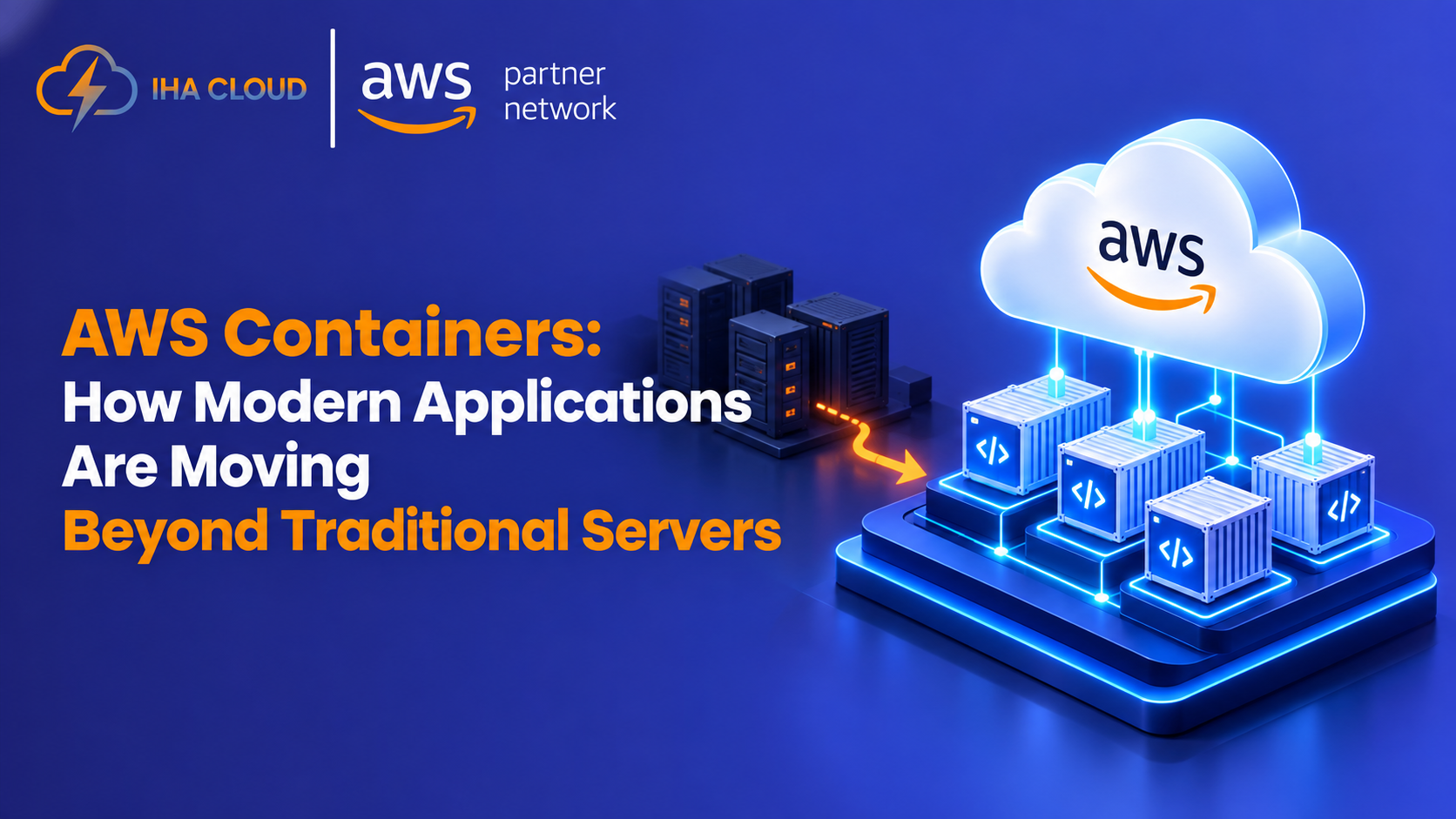
An application doesn’t always need more servers just because one part of it gets busier. Modern architectures increasingly separate workloads so individual components can scale and deploy independently.
That is where AWS containers can help.
Containers package an application with its code, runtime, libraries, and dependencies into a consistent unit. Instead of managing an application around a fixed server environment, teams can deploy workloads more independently.
AWS provides several ways to run these workloads, including Amazon ECS, Amazon EKS, and AWS Fargate.
What Are AWS Containers?
The term AWS containers generally refer to running containerized applications on AWS using services such as ECS, EKS, and Fargate.
A container creates a consistent environment across development, testing, and production. This can make deployments more predictable and simplify the process of moving applications between environments.
AWS offers different services depending on how much control and infrastructure management a team needs:
- Amazon ECS: AWS-native container orchestration.
- Amazon EKS: Managed Kubernetes for teams using the Kubernetes ecosystem.
- AWS Fargate: Serverless compute for containers, without requiring teams to provision or manage the underlying servers.
Why Use Containers?
Consider a SaaS application with an API, background workers, and scheduled jobs. Each component may have different resources and scaling requirements.
With containers, these workloads can be deployed separately. If API traffic increases, the API containers can scale without necessarily increasing capacity for the background workers or scheduled jobs.
The same approach works for e-commerce platforms, data-processing pipelines, and applications with frequent deployments.
Containers can also make CI/CD workflows more consistent because the same container image can move through development, testing, and production.
When Do AWS Containers Make Sense?
Containers are particularly useful when applications need:
- Independent deployments
- Flexible scaling
- Consistent environments
- Frequent releases
- Microservices architectures
- Automated deployment workflows
They aren’t automatically the right choice for every application. A small application with predictable traffic and a simple deployment process may not need the additional complexity of container orchestration.
There is also still operational work involved. Teams need to consider networking, security, monitoring, resource allocation, and container management.
The Bigger Shift
AWS containers aren’t about eliminating servers. They’re about giving teams more control over how application workloads are deployed and managed.
For modern applications, containers can provide a practical way to separate workloads, scale components independently, and standardize deployments while still requiring thoughtful decisions around networking, security, monitoring, and infrastructure management.