IHA Cloud

Author name: Shivam Pokhriyal

DevOps Automation Services - IHA Cloud

DevOps Automation Services

In today’s fast-paced digital landscape, businesses must deliver software quickly, securely, and reliably to stay competitive. Traditional development and IT operations often struggle with long release cycles, inconsistent environments, and manual, error-prone processes. This is where DevOps Automation Services play a critical role. DevOps automation combines culture, processes, and advanced tools to streamline software development, testing, deployment, and monitoring. By automating repetitive tasks, organizations can accelerate delivery, reduce operational risks, improve collaboration between development and operations teams, and optimize cloud resources. Modern enterprises rely on DevOps automation not only to release applications faster but also to maintain high quality, security, and scalability. From continuous integration and continuous delivery (CI/CD) to infrastructure as code (IaC) and automated monitoring, DevOps automation is the backbone of agile, cloud-driven business operations. This guide explores how DevOps automation works, the best practices for implementing it, and why IHA Cloud’s DevOps Automation Services are uniquely positioned to help businesses overcome today’s IT challenges and thrive in a competitive environment. What is DevOps Automation? DevOps Automation is the practice of using tools and processes to automate software development, testing, deployment, and IT operations. It reduces manual effort, speeds up release cycles, ensures consistent environments, and improves collaboration between development and operations teams. By integrating continuous integration (CI), continuous delivery (CD), and infrastructure automation, businesses can deliver high-quality applications faster, more reliably, and at scale. 2. Why DevOps Needs Automation While DevOps emphasizes culture and collaboration, automation is the backbone that brings its principles to life. Without automation, teams still face: Automation eliminates repetitive tasks and allows engineers to focus on innovation. Key Advantages of Automating DevOps Workflows: 3. Core Pillars of DevOps Automation Services 3.1 Continuous Integration (CI) CI automates the process of integrating code from multiple developers into a shared repository.Every code commit triggers automated builds and tests, allowing teams to detect issues early.Popular CI tools: Jenkins, GitLab CI, CircleCI 3.2 Continuous Delivery & Deployment (CD) CD extends CI by automating the steps to release the tested code into staging or production environments.It ensures faster, reliable, and low-risk software releases.Tools often used: ArgoCD, Spinnaker, AWS CodeDeploy 3.3 Infrastructure as Code (IaC) IaC automates the provisioning and configuration of cloud resources using code rather than manual processes.It guarantees that environments are consistent, repeatable, and version-controlled.Key tools: Terraform, AWS CloudFormation, Pulumi 3.4 Configuration Management Configuration management ensures all environments have the right software, libraries, and settings.With automation, changes can be rolled out quickly across hundreds of servers.Common tools: Ansible, Puppet, Chef 3.5 Automated Testing Automated test frameworks validate code at every stage—unit, integration, security, and performance tests.This reduces bugs and enhances product quality. 3.6 Monitoring & Logging Automated monitoring provides real-time visibility into application and infrastructure performance.When combined with alerting tools, it helps teams respond to incidents proactively.Popular solutions: Prometheus, Grafana, ELK Stack, Datadog 4. Benefits of DevOps Automation Services 4.1 Faster Time-to-Market By reducing manual interventions, companies can deliver updates and new features more frequently. 4.2 Cost Efficiency Automation optimizes resource usage in cloud environments and reduces downtime, which directly saves money. 4.3 Improved Quality & Reliability Automated testing and monitoring ensure that every release meets performance and security standards. 4.4 Enhanced Collaboration Teams can work on shared pipelines and get immediate feedback, fostering a culture of collaboration. 4.5 Scalability Automated workflows and infrastructure make it simple to scale up or down based on demand. 5. Common Challenges in DevOps Automation While the benefits are significant, organizations often face challenges such as: Working with an experienced partner like IHA Cloud helps overcome these hurdles with expert guidance and proven frameworks. 6. Future of DevOps Automation As cloud adoption grows and software delivery accelerates, DevOps automation will continue to evolve with: Businesses that embrace these trends will gain a competitive advantage in delivering secure, high-quality software at scale. How DevOps Automation Services Work In this part, we’ll explore the step-by-step workflow of DevOps automation, the tools involved at each stage, and how businesses integrate them into their cloud environments for maximum efficiency. 1. Overview of the DevOps Automation Workflow The DevOps automation lifecycle is a continuous loop rather than a linear process.It combines planning, development, integration, testing, deployment, monitoring, and feedback into a seamless automated pipeline. Here’s how it typically flows: Plan → Code → Build → Test → Release → Deploy → Operate → Monitor → Feedback Automation tools orchestrate these steps so that changes move from development to production quickly and reliably, reducing delays and errors. 2. Planning and Collaboration Before any code is written, DevOps teams plan the project by: Popular tools for planning and collaboration include: Key Benefit: Aligns development, operations, and business teams around shared goals, reducing silos. 3. Source Code Management Version control is the backbone of DevOps.It allows teams to work on the same codebase without overwriting each other’s work. Typical processes include: Popular tools: Why it matters: Every change is tracked, making it easier to roll back if issues arise. 4. Continuous Integration (CI) CI ensures that code updates from all developers are integrated and tested automatically. How it works: Tools often used: Key Benefits: 5. Continuous Testing Testing is integrated into the CI pipeline to maintain code quality. Types of automated tests include: Tools for automated testing: Why it matters: Prevents defective code from reaching production, reducing risks and costs. 6. Continuous Delivery & Deployment (CD) Once code passes all tests, it is automatically prepared for deployment. Deployment tools: Key Benefit: Releases become predictable, faster, and less prone to human error. 7. Infrastructure as Code (IaC) IaC automates the creation and management of cloud resources (servers, databases, load balancers, etc.) through code instead of manual provisioning. Common tools: Key Benefit: Consistency, scalability, and repeatability across cloud environments. 8. Configuration Management Ensuring that applications run smoothly across multiple servers or regions requires consistent configuration. Configuration management tools automate this by: Popular tools: 9. Monitoring and Logging Monitoring is critical to ensure that automated workflows continue running optimally. Monitoring involves: Logging involves: Key tools: Key Benefit: Reduces downtime and helps

DevOps Automation Services Read More »

Top 15 Open Source CRM Software on GitHub

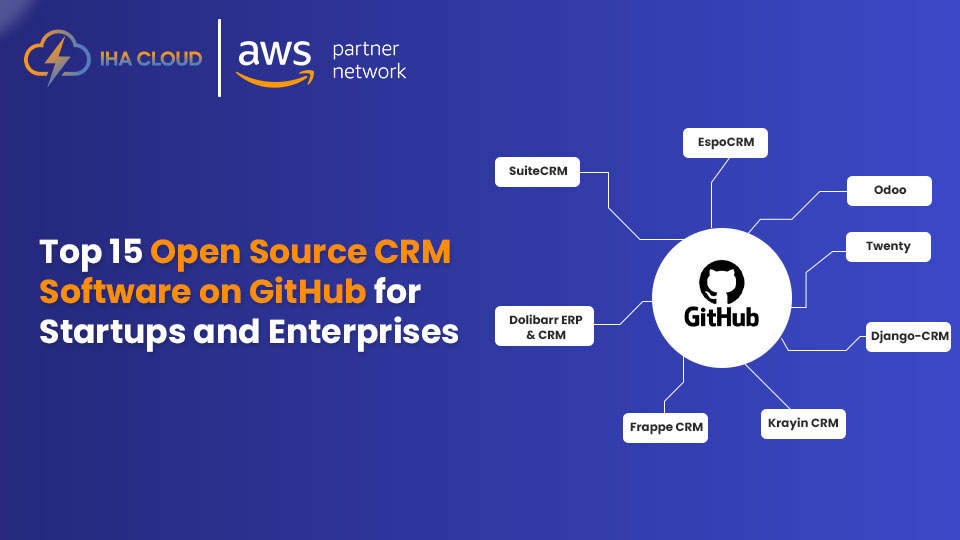
Top 15 Open Source CRM Software on GitHub (2025)

In today’s competitive digital world, businesses rely heavily on Customer Relationship Management (CRM) software to manage leads, build stronger client relationships, and boost sales performance. While there are many premium CRM platforms available, they often come with expensive licensing fees and limited flexibility. This is why more companies are turning to open source CRM software on GitHub. The advantage of using open source CRM software is the freedom to customize and scale the platform as your business grows. Whether you are a startup seeking a lightweight CRM or a large enterprise requiring advanced features like workflow automation, analytics, and integrations, open-source solutions provide unmatched flexibility without heavy costs. By exploring GitHub, businesses can access some of the most innovative CRM solutions built by global communities of developers. These tools are constantly updated, often come with a wide range of plugins and APIs, and allow you to tailor workflows to your unique processes. In this blog, we highlight the Top 15 Open Source CRM Software on GitHub that can help you manage sales, streamline marketing, enhance customer support, and drive business growth. From popular names like SuiteCRM, Vtiger, and EspoCRM to specialized platforms like CiviCRM for nonprofits and Corteza CRM for privacy-focused businesses, this curated list covers reliable tools for businesses of all sizes. If you’re looking to boost your business with CRM software that is customizable, cost-effective, and backed by active open-source communities, these top picks from GitHub are worth exploring. 📝 What is Open Source CRM Software? Open source CRM software is a customer relationship management solution where the source code is publicly available. This means businesses can download, use, and customize the platform according to their specific needs without paying high licensing fees. Unlike proprietary CRM tools that limit flexibility and often lock businesses into subscriptions, open source CRM allows for greater control, scalability, and innovation. Organizations can modify workflows, add integrations, and ensure that the software aligns perfectly with their processes. Key capabilities often include: 🏆 Why Choose Open Source CRM Software from GitHub? 1. Cost-Effectiveness Open source CRM solutions are usually free to download and use, with costs limited to hosting, support, and custom development. This makes them a practical choice for startups and growing businesses. 2. Flexibility and Customization Because the source code is open, companies can adapt the CRM to their business model. Whether you need to modify sales pipelines, integrate new APIs, or automate unique workflows, open source tools provide the flexibility to do so. 3. Community-Driven Development CRMs available on GitHub are supported by large communities of developers. These communities constantly improve features, fix bugs, and offer regular updates, ensuring the software remains reliable and up to date. 4. No Vendor Lock-In With open source CRM, businesses are not dependent on a single vendor for updates, support, or licensing renewals. This independence reduces long-term risks and allows for more competitive pricing in customization and maintenance. 5. Scalability Open source CRM platforms can scale easily as your customer base and team size grow. Businesses can add modules, increase performance capacity, and integrate new tools without replacing the entire system. 6. Transparency and Security Since the source code is publicly accessible, businesses can audit the software for security and compliance. This transparency makes it easier to trust the platform for handling sensitive customer data. 🔍 Which Type of Open Source CRM Should You Choose? 1. For Startups and Small Businesses Choose lightweight CRM platforms that are easy to install, simple to use, and require minimal server resources. These solutions help in managing basic sales and customer relationships without overwhelming teams with advanced enterprise features. 2. For Sales-Driven Teams Select CRM solutions that prioritize pipeline management, workflow automation, and marketing campaigns. Such platforms improve lead scoring, streamline follow-ups, and enhance sales performance. 3. For eCommerce or B2B Businesses Opt for CRMs that specialize in multi-channel tracking and advanced analytics. These tools help businesses capture data from different channels—like online stores, social media, and email—to create unified customer profiles. 4. For Nonprofits and NGOs Some open source CRMs are designed specifically for fundraising, donor management, and event tracking. They often integrate with content management systems (CMS) like WordPress or Drupal for seamless campaign management. 5. For Enterprises and Large Organizations Choose enterprise-grade CRM solutions with multi-tenant architecture, robust security, and integration with ERP systems. These platforms can handle high volumes of data and complex workflows across departments. 6. For Privacy-Focused Businesses Consider open source CRMs that emphasize data security, compliance (such as GDPR), and modular customization. These platforms are especially valuable for organizations in regulated industries. 📈 Additional Factors to Consider When selecting an open source CRM from GitHub, evaluate: Quick Comparison: Top 15 Open Source CRM Software on GitHub # CRM Software GitHub Link Best For Key Features 1 SuiteCRM SuiteCRM on GitHub SMBs & Enterprises Sales & marketing automation, workflows, reporting, API integrations 2 EspoCRM EspoCRM on GitHub Startups & SMBs User-friendly UI, workflow automation, REST API, customizable modules 3 YetiForce CRM YetiForce on GitHub Growing Businesses 100+ modules, advanced security, VoIP & email integration, GDPR compliance 4 OroCRM OroCRM on GitHub eCommerce & B2B Multi-channel tracking, workflow engine, segmentation, Symfony-based 5 Vtiger CRM Vtiger on GitHub Sales & Support Teams Lead management, email campaigns, inventory, helpdesk, integrations 6 Dolibarr ERP & CRM Dolibarr on GitHub Startups & Small Enterprises Unified ERP + CRM, invoicing, project management, marketplace add-ons 7 CiviCRM CiviCRM on GitHub Nonprofits & NGOs Donor & member management, event campaigns, CMS integration, analytics 8 X2CRM X2CRM on GitHub Marketing & Sales Teams Lead scoring, social CRM, workflow automation, advanced analytics 9 Axelor Open Suite (CRM Module) Axelor on GitHub Medium & Large Businesses CRM + ERP + BPM, automation workflows, modern UI, integration-ready 10 Zurmo CRM Zurmo on GitHub SMBs & Teams Seeking Engagement Gamification, sales automation, marketing campaigns, API-driven 11 EspoPortal CRM (Extensions) EspoPortal on GitHub Service-Oriented Businesses Customer self-service portals, knowledge base, notifications, role-based access 12 Apache OFBiz (CRM Component) Apache OFBiz on GitHub Large Enterprises CRM +

Top 15 Open Source CRM Software on GitHub (2025) Read More »

what is DevOps as a Service - a complete guide

What is DevOps as a Service? A Complete Guide

Introduction In today’s fast-paced digital world, businesses need to build and deliver software quickly and reliably. That’s where DevOps as a Service (DaaS) comes in. Traditionally, DevOps is a culture and a set of practices that bring together development (Dev) and operations (Ops) teams to speed up software delivery and improve collaboration. However, setting up a full DevOps infrastructure in-house can be expensive, complex, and time-consuming. DevOps as a Service solves this problem by offering DevOps capabilities through cloud-based platforms or managed services. Instead of building everything from scratch, companies can use pre-built tools, workflows, and expertise provided by a DaaS vendor. In simple words, DaaS allows businesses to focus on building their applications while experts handle the automation, infrastructure, and delivery pipelines. What Is DevOps as a Service? DevOps as a Service (DaaS) is a model where a third-party provider sets up and manages your entire DevOps environment — including CI/CD pipelines, cloud infrastructure, testing, security, and monitoring. Traditionally, companies had to: With DaaS, all of this is delivered on demand through the cloud.You get a ready-to-use DevOps framework that can scale with your business — without needing to worry about the technical complexity. In short: DaaS = DevOps delivered as a managed service, allowing you to focus on innovation while experts handle the processes. How DevOps as a Service Works DaaS providers typically follow a streamlined approach: This model eliminates the heavy lifting of setting up and maintaining DevOps in-house. Why DevOps as a Service Matters Adopting DevOps practices is no longer optional for businesses that want to stay competitive.Here’s why the DaaS approach makes sense: DevOps as a Managed Service When you opt for DevOps as a Managed Service, you essentially hire a team of experts who take care of your entire DevOps environment. Here’s what it means: This approach is ideal for businesses that: In short, DevOps as a Managed Service offers a hands-off experience. You get all the benefits of DevOps — like faster deployments, fewer errors, and better collaboration — without managing the technical complexity yourself. DevOps Platform as a Service vs. DaaS It’s common to confuse DevOps Platform as a Service (PaaS) with DevOps as a Service (DaaS), but they are not the same. Here’s the difference: 1. DevOps Platform as a Service (PaaS) 2. DevOps as a Service (DaaS) Choosing Between Them In many cases, growing businesses and startups prefer DaaS because it’s faster to set up and requires fewer internal resources. Key Benefits of DevOps as a Service Businesses are shifting to DevOps as a Service because it brings speed, efficiency, and reliability to software delivery. Let’s look at the major benefits in simple terms: 1. Faster Time to Market DaaS providers set up automated CI/CD pipelines that speed up coding, testing, and deployment.This means new features, updates, and bug fixes reach customers faster — giving businesses a competitive edge. 2. Cost-Effective Approach Building an in-house DevOps setup requires expensive tools, cloud infrastructure, and skilled engineers.With DaaS, you pay only for the services you use. This reduces upfront investment and operational costs. 3. Expert Support and Maintenance DaaS providers have experienced DevOps engineers who know best practices, tools, and security standards.You get 24/7 support, continuous monitoring, and quick resolution of issues — without hiring a full in-house team. 4. Scalability and Flexibility As your business grows, your DevOps needs also expand.With DaaS, you can easily scale up or down your infrastructure and processes to match your project’s size and requirements. 5. Enhanced Security and Compliance Leading DaaS providers ensure your workflows and infrastructure follow strict security protocols.They also help businesses comply with industry regulations like GDPR, HIPAA, or ISO standards. 6. Improved Collaboration By centralizing tools, processes, and workflows in the cloud, DaaS breaks down silos between developers, testers, and operations teams.Everyone works in sync, which reduces delays and miscommunication. In short, DaaS delivers all the DevOps benefits — speed, reliability, and cost savings — without the burden of managing everything internally. Who Benefits Most from the DaaS Model? Not every organization has the same needs.Here’s who can gain the most from DevOps as a Service: 1. Startups and Small Businesses Startups often have limited budgets and small teams.DaaS lets them launch products quickly and affordably without the expense of hiring DevOps specialists or buying complex tools. 2. Growing Companies and Mid-Sized Enterprises As businesses scale, they face challenges like handling more deployments, ensuring consistent quality, and managing complex infrastructures.DaaS provides the flexibility to grow operations smoothly without slowing down innovation. 3. Enterprises with Legacy Systems Large companies often deal with outdated infrastructure.DaaS providers can modernize their delivery pipelines and migrate them to the cloud for better performance and efficiency. 4. Software Development Agencies Agencies that manage multiple client projects can use DaaS to standardize workflows, automate testing, and deploy faster.This improves client satisfaction and reduces project delivery times. 5. Organizations with Compliance Needs Industries like healthcare, finance, and e-commerce face strict compliance requirements.DaaS providers ensure these companies maintain secure and compliant DevOps processes. Leading DevOps as a Service Providers and Platforms The growing demand for DaaS has led to many reliable service providers and platforms offering specialized tools and expertise.Here’s a look at some of the most popular and trusted DaaS solutions businesses rely on: 1. AWS DevOps Services Amazon Web Services (AWS) is one of the biggest names in cloud computing and DevOps.It offers tools like AWS CodePipeline, CodeBuild, and CodeDeploy that automate application delivery and infrastructure management.AWS is a good choice for companies already using Amazon’s cloud ecosystem. 2. Microsoft Azure DevOps Azure DevOps provides cloud-based CI/CD pipelines, repositories, project tracking, and testing tools.It integrates easily with Microsoft products and is widely used by enterprises for large-scale DevOps workflows. 3. Google Cloud DevOps Google’s DevOps services focus on reliability, security, and scalability.Tools like Cloud Build, Artifact Registry, and Cloud Deploy simplify containerized application delivery and monitoring. 4. GitLab GitLab is an all-in-one DevOps platform offering source code management, CI/CD, container registry, and monitoring in a single interface.Its

What is DevOps as a Service? A Complete Guide Read More »

17 Best Open Source Applications to Explore in 2025

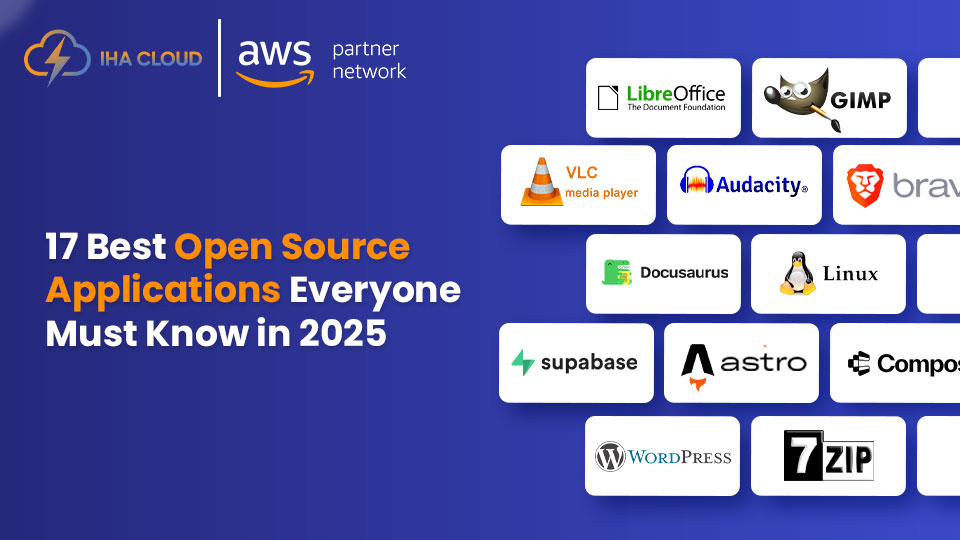
17 Best Open Source Applications to Explore in 2025

In today’s fast-changing digital world, businesses and individuals rely heavily on software to manage everything — from communication and collaboration to data storage and project management. While premium software solutions are popular, open source applications have emerged as a powerful alternative for 2025. The demand for the best open source applications is growing rapidly because they offer flexibility, cost savings, and community-driven innovation. Unlike proprietary software, open source tools allow you to access the source code, customize the platform to meet your unique needs, and enjoy frequent updates from a global community of developers. Whether you’re a startup looking for affordable tools, a growing enterprise in need of robust solutions, or a freelancer exploring new ways to boost productivity, open source applications in 2025 provide versatile options. They help cut down costs without compromising on quality or performance. In this blog, we’ll explore the 17 best open source applications to explore in 2025. These tools cover a wide range of business and personal needs — including content management, project collaboration, customer relationship management, file sharing, and more. By the end, you’ll discover why open source software is no longer just an alternative but often the first choice for modern businesses. Quick comparison table: 17 Best Open Source Applications to Explore in 2025 No. Open Source Application Primary Use Key Features Best For 1 WordPress Content Management System (CMS) Customizable themes & plugins, SEO-friendly, user-friendly editor Blogs, websites, e-commerce 2 Nextcloud File Sharing & Collaboration Secure cloud storage, file sync, team collaboration Businesses & remote teams 3 Odoo ERP & Business Management CRM, sales, inventory, accounting, customizable modules Small to medium businesses 4 SuiteCRM Customer Relationship Management (CRM) Lead & pipeline management, analytics, integrations Sales & marketing teams 5 GIMP Image Editing Advanced photo editing tools, open-source Photoshop alternative Designers & content creators 6 LibreOffice Office Productivity Suite Word processor, spreadsheets, presentations Individuals & businesses 7 Blender 3D Modeling & Animation 3D modeling, rendering, video editing, VFX Animators, game designers 8 OpenProject Project Management Task tracking, Gantt charts, time tracking, collaboration Teams & project managers 9 phpBB Online Forum Platform Community forums, customizable templates, plugins Community-driven businesses 10 Dolibarr ERP & CRM Suite Billing, inventory, HR, project management SMEs & freelancers 11 Discourse Modern Online Forum & Community Platform Real-time notifications, moderation tools, gamification Online communities & brands 12 ERPNext ERP & Business Software Accounting, HR, inventory, CRM, project management Enterprises & startups 13 Magento Open Source E-Commerce Platform Product management, checkout options, SEO tools Online retailers 14 Mautic Marketing Automation Email campaigns, lead scoring, segmentation, analytics Marketing teams 15 Rocket.Chat Team Communication Platform Real-time chat, video calls, integrations, secure messaging Remote teams & enterprises 16 ONLYOFFICE Office Productivity Suite Document editing, spreadsheets, cloud collaboration Teams & businesses 17 Zabbix IT Infrastructure Monitoring Network & server monitoring, dashboards, alerts IT administrators & DevOps Here is the detailed description of 17 Best Open Source Applications to Explore 1. LibreOffice LibreOffice is one of the most reliable and widely used open-source office suites. It’s a full-featured alternative to Microsoft Office, making it ideal for businesses, students, and professionals who want to save costs without compromising on productivity. Detailed Overview:LibreOffice includes Writer (word processing), Calc (spreadsheets), Impress (presentations), Draw (vector graphics), Base (database management), and Math (formula editing). The suite is compatible with a variety of document formats like DOCX, XLSX, and PPTX, allowing easy sharing and collaboration. Why It Stands Out: Ideal Use Case:Small businesses, NGOs, and startups can rely on LibreOffice for document editing, reports, presentations, and budget management without spending on expensive software subscriptions. 2. OnlyOffice OnlyOffice is a powerful collaborative office suite designed for modern businesses that need real-time teamwork. It competes closely with Google Workspace and Microsoft 365 but offers better control with both cloud and self-hosted deployments. Detailed Overview:OnlyOffice includes editors for documents, spreadsheets, and presentations, all of which support major file formats. It’s especially popular with teams that prioritize data privacy and want to host their collaboration tools on their own servers. Key Strengths: Ideal Use Case:Startups and growing businesses looking for a cost-effective yet secure alternative to cloud office suites can rely on OnlyOffice for collaboration and productivity. 3. Nextcloud Nextcloud is a self-hosted, open-source collaboration platform that lets businesses manage their own cloud storage, file sharing, and communication tools without relying on third-party cloud providers. Detailed Overview:Nextcloud is often compared to services like Dropbox and Google Drive but stands out because it’s self-hosted, giving businesses complete control over their data. It includes features like file synchronization, video conferencing, chat, calendar, and email integration. Why It’s a Game-Changer: Ideal Use Case:Organizations that need secure, private cloud storage and collaboration tools—especially in industries like healthcare, legal, or education—can rely on Nextcloud to maintain compliance and reduce dependency on big tech platforms. 4. Mattermost Mattermost is an open-source messaging and collaboration platform designed for technical and operational teams. It’s often called a self-hosted alternative to Slack because it provides similar messaging and collaboration features with added privacy and control. Detailed Overview:Mattermost offers team messaging channels, file sharing, voice and video calls, and integrations with popular DevOps tools. It’s built for developers, engineers, and businesses that require secure, compliant internal communication. Key Features That Stand Out: Ideal Use Case:Enterprises and growing businesses that handle sensitive projects or need strong integration with DevOps workflows benefit most from Mattermost, as it combines secure communication with collaborative productivity. 5. SuiteCRM SuiteCRM is one of the most popular and robust open-source CRM platforms, widely used by small, medium, and large businesses to manage customer relationships. It’s often recognized as a cost-effective alternative to Salesforce because it provides a comprehensive set of features without the heavy licensing costs. Detailed Overview:SuiteCRM helps businesses streamline their sales, marketing, and customer service processes in one platform. It offers tools for lead and opportunity management, email marketing, campaign tracking, reporting, and workflow automation. Why It Stands Out: Ideal Use Case:Organizations looking for a budget-friendly yet feature-rich CRM solution—especially startups and SMEs—can use SuiteCRM to enhance customer engagement,

17 Best Open Source Applications to Explore in 2025 Read More »

Application Modernization with AWS and IHA Cloud

Accelerate Your Application Modernization with AWS and IHA Cloud

Many organizations are still running critical applications on legacy systems that were built years ago for a very different business environment. While these systems may still function, they often limit scalability, slow down innovation, and increase costs. Customers expect more agility, faster updates, and seamless experiences—and businesses need the right foundation to deliver on those expectations. That’s where application modernization comes in. By modernizing applications with AWS and IHA Cloud, businesses can unlock new capabilities, improve efficiency, and prepare for future growth. Why Application Modernization Matters Legacy applications often: Depend on expensive, inflexible infrastructure Struggle to handle spikes in demand Require long, manual deployment cycles Introduce security and compliance challenges Modernization changes this by enabling: Agility – frequent updates and faster feature delivery Resilience – self-healing, scalable architectures Security – cloud-native compliance and monitoring Cost efficiency – optimized usage and reduced overhead How IHA Cloud and AWS Accelerate Modernization At IHA Cloud, we guide businesses through every stage of modernization with AWS. Our approach includes: Cloud-Native ArchitecturesMigrating applications into containers, microservices, or serverless using Amazon ECS, Amazon EKS, and AWS Lambda for improved scalability and performance. DevOps and AutomationImplementing CI/CD pipelines and Infrastructure as Code (IaC) to reduce deployment time and improve reliability. Modern Data PlatformsTransitioning to managed services like Amazon RDS or DynamoDB while ensuring data is secure and accessible. Built-in Security and ComplianceEmbedding AWS security best practices from day one, covering IAM, encryption, and monitoring. Real-World Impact For one of our clients, we helped re-platform a customer-facing portal that previously required weeks for a new release. After application modernization with AWS and IHA Cloud, deployment cycles were reduced to hours, infrastructure costs dropped by 25%, and customer feedback scores significantly improved. The Road Ahead Application modernization isn’t about replacing old systems overnight—it’s about creating a foundation for continuous improvement. With IHA Cloud and AWS, businesses gain the flexibility to innovate, scale, and stay ahead without the limitations of legacy technology. Ready to Modernize Your Applications? 👉 Contact IHA Cloud today to accelerate your application modernization with AWS.

Accelerate Your Application Modernization with AWS and IHA Cloud Read More »

Scale Rapidly with AWS Migration

Scale Rapidly by Migrating to AWS with IHA Cloud

Scaling a business is no longer just about adding more servers or hiring more staff — it’s about having the right foundation to grow without limits. Whether you’re a startup preparing for your next big product launch or an established enterprise entering new markets, the ability to scale quickly and efficiently can determine your success. That’s where IHA Cloud and AWS make the difference. The Power of AWS for Scaling By migrating to AWS, your organization gains access to a cloud platform built to handle growth at any pace. Key benefits include: Elastic scalability – Scale resources up or down in minutes to match demand, ensuring performance during traffic spikes while avoiding overspending during low usage. Global reach – Expand into new regions seamlessly with AWS’s worldwide infrastructure, serving customers with low latency anywhere. Resilience and reliability – Ensure business continuity with AWS’s secure, high-availability infrastructure. Agility for innovation – Experiment, test, and deploy new features faster without the burden of traditional infrastructure constraints. Why Scale with IHA Cloud + AWS? At IHA Cloud, we don’t just migrate workloads — we design scalable architectures tailored to your business. With our expertise and AWS’s powerful cloud services, you’ll be able to: Launch new applications without worrying about infrastructure bottlenecks. Handle unpredictable workloads with confidence. Optimize costs while growing, ensuring every dollar spent supports innovation and expansion. Leverage advanced services — from containers to serverless computing — for rapid, flexible scaling. Beyond Infrastructure: Growth Opportunities Scaling isn’t only about technology. With AWS, you also gain access to a rich ecosystem and marketplace that supports your expansion. Whether it’s integrating cutting-edge tools, collaborating with partners, or offering your own solutions to a global audience, AWS helps you grow smarter and faster. Your Next Step Toward Rapid Growth Migrating to AWS is more than a technical upgrade — it’s a strategic move that empowers you to scale at the speed of opportunity. With IHA Cloud by your side, you’ll have the strategy, support, and expertise to grow with confidence. Ready to scale without limits? Connect with our team today and explore how IHA Cloud and AWS can accelerate your business growth.

Scale Rapidly by Migrating to AWS with IHA Cloud Read More »

Achieve Faster and Safer Growth on AWS with IHA Cloud

Achieve Faster and Safer Growth on AWS with IHA Cloud

In today’s digital-first world, businesses face increasing pressure to innovate quickly while keeping their data, applications, and infrastructure secure. From regulatory compliance to protecting customer trust, security is no longer optional — it’s the foundation for long-term growth. That’s where IHA Cloud and AWS step in. At IHA Cloud, we help organizations accelerate growth while ensuring their cloud environments are built on the safest and most reliable foundation possible. Powered by Amazon Web Services (AWS), our solutions are designed to meet core security and compliance requirements without slowing down innovation. Why Security and Compliance Matter Every business, whether in finance, healthcare, e-commerce, or technology, is bound by strict regulatory and compliance standards. Challenges like GDPR, HIPAA, PCI DSS, and SOC 2 can often overwhelm growing companies. Without the right foundation, these requirements can: Delay product launches Increase operational costs Expose businesses to unnecessary risks By leveraging AWS’s industry-leading security framework, IHA Cloud helps you simplify compliance, reduce risk, and focus on what matters most — growing your business. The AWS Advantage: Security at the Core AWS is trusted by millions of customers worldwide for its robust security, scalability, and compliance-ready services. With more than 100 security standards and certifications, AWS provides the infrastructure and tools businesses need to safeguard sensitive data. Some of the key AWS features we leverage for our clients include: AWS Identity and Access Management (IAM): Control and secure access to resources. AWS Shield & WAF: Protect applications against DDoS and malicious traffic. Amazon GuardDuty: Continuous threat detection and monitoring. Encryption by Default: Protect data at rest and in transit. Compliance-Ready Services: Pre-certified for GDPR, HIPAA, FedRAMP, SOC, and more. How IHA Cloud Helps You Grow Safely While AWS provides the foundation, IHA Cloud brings the expertise and hands-on implementation you need to fully unlock its potential. Our services include: Cloud Architecture & Migration: Moving workloads to AWS with zero compromise on security. Compliance Audits & Strategy: Ensuring your cloud infrastructure meets industry regulations. Managed Cloud Security: 24/7 monitoring, incident response, and proactive defense. Cost Optimization with Security Built-In: Achieve savings without sacrificing compliance. Real Business Impact By partnering with IHA Cloud and AWS, businesses are able to: Launch products faster while staying compliant Reduce risks and avoid costly penalties Protect customer trust with enterprise-grade security Scale confidently knowing their infrastructure is built on the world’s most secure cloud Ready to Achieve Faster, Safer Growth? Security and compliance don’t have to slow you down. With IHA Cloud and AWS, your business can achieve faster innovation, safer operations, and long-term growth — all on the world’s most reliable cloud platform. 👉 Learn more about how IHA Cloud and AWS can help you meet compliance and accelerate growth today.

Achieve Faster and Safer Growth on AWS with IHA Cloud Read More »

Cut Costs and Risks with Faster, Simpler Cloud Migration on AWS

Cut Costs and Risks with Faster, Simpler Cloud Migration on AWS

Migrating to the cloud is no longer just an option — it’s a business imperative. Companies worldwide are moving to the cloud to improve agility, scale efficiently, and reduce costs. But for many organizations, Cloud Migration on AWS still feels daunting. Concerns about downtime, expenses, security, and business disruption often delay transformation. The good news? With AWS and IHA Cloud, your cloud migration doesn’t have to be complicated. Together, we help businesses migrate faster, minimize risks, and achieve cost savings from day one. Why Businesses Move to the Cloud Organizations of all sizes are realizing the value of moving from traditional on-premises IT to the cloud. Some of the top drivers include: Lower operating costs: Pay-as-you-go pricing means you don’t spend on unused infrastructure. Scalability: Grow your resources instantly during peak demand. Improved security: Benefit from AWS’s enterprise-grade compliance and protection. Faster innovation: Free up IT teams to focus on building, not maintaining. Yet without the right strategy, migrations can become expensive and risky. That’s why partnering with experts is critical. How AWS Simplifies Migration Amazon Web Services (AWS) has developed proven methodologies, tools, and frameworks that make migrations faster, more reliable, and cost-efficient. Key AWS migration benefits include: AWS Migration Hub – Track progress of your apps and databases in one place. Automation tools – Reduce manual work and errors during the migration process. Cost optimization – Right size resources to avoid overspending. Proven frameworks – Minimize risks using tried-and-tested AWS migration best practices. Simply put: AWS provides the building blocks to migrate quickly while cutting costs and risks. IHA Cloud: Your Trusted Migration Partner While AWS provides the technology, you need the right partner to guide you through the journey. That’s where IHA Cloud comes in. Our team specializes in: Migration Assessment – Analyzing your current workloads, costs, and migration readiness. Strategic Roadmap – Creating a clear step-by-step migration plan. Seamless Execution – Moving applications, databases, and workloads with minimal downtime. Post-Migration Optimization – Continuously monitoring to maximize performance and reduce costs. With years of experience across industries, we’ve helped organizations avoid migration risks while unlocking significant cost savings. Cutting Costs with AWS + IHA Cloud Cloud migration is not just about moving workloads — it’s about doing so smartly and cost-effectively. Here’s how AWS and IHA Cloud help reduce costs: Here’s how we partner with you: No overprovisioning – Scale resources up or down as needed. Eliminate hardware costs – No more upfront capital expenses for servers. Optimize licenses – Right-size software licensing models. Automation savings – Reduce time and costs with automation-driven migrations. Our clients have consistently achieved 30–50% cost savings compared to traditional IT setups. Reducing Risks During Migration Risk is often the biggest concern during cloud migration. With IHA Cloud and AWS, you can migrate with confidence. We ensure: Zero to minimal downtime for critical applications Secure data transfer with encryption and compliance adherence Disaster recovery readiness built into your migration plan Comprehensive testing before full production cutover This means your business operations remain uninterrupted while you transition to the cloud. Real-World Impact Imagine cutting your IT spend in half while also improving uptime, security, and scalability. That’s the power of migrating to AWS with the right partner. For example, one of our clients in the retail sector was able to: Reduce infrastructure costs by 40% Cut migration risks through phased workload transitions Accelerate innovation with AWS-native services Ready to Migrate Smarter? Cloud migration doesn’t have to be slow, risky, or expensive. With AWS and IHA Cloud, you can move faster, save more, and reduce risk every step of the way. 👉 Contact us today to learn how our cloud migration experts can help.👉 Start your journey with a migration assessment and see how much you can save.

Cut Costs and Risks with Faster, Simpler Cloud Migration on AWS Read More »

Innovate and Go to Market Faster with AWS and IHA Cloud

Innovate and Go to Market Faster with AWS and IHA Cloud

In today’s fast-paced digital world, innovation and speed are no longer optional — they’re the foundation for success. Businesses that can deliver new products and services quickly gain a competitive edge, while those that struggle with outdated systems risk falling behind. That’s where cloud adoption and modern SaaS (Software as a Service) models come in. And with the combined power of AWS and IHA Cloud, you can accelerate your journey from idea to market launch with ease. Why Speed Matters in Today’s Market Customer expectations are at an all-time high. They want seamless experiences, personalized services, and instant access — no matter the industry. Whether you’re in healthcare, finance, retail, or technology, the ability to innovate faster directly impacts customer satisfaction and revenue growth. Traditional IT infrastructures often slow this down: Long provisioning times for new environments High upfront costs for hardware and software Difficulty scaling up during peak demand Limited flexibility to test and launch new services. The result? Missed opportunities and slow time-to-market. How AWS Accelerates Innovation Amazon Web Services (AWS) provides the global infrastructure and powerful cloud services that help businesses: Scale on-demand: Instantly add resources when your application grows. Build securely: Enterprise-grade security and compliance, without complexity. Reduce costs: Pay only for what you use — no heavy upfront investments. Experiment faster: Test new ideas with ready-to-use environments and services. From databases and analytics to AI/ML and serverless computing, AWS offers everything you need to bring innovations to market quickly and confidently. SaaS: The Model Customers Prefer Today’s customers don’t just want software — they want flexible, scalable SaaS solutions that evolve with their needs. SaaS enables you to: Deliver updates instantly without downtime Offer subscription-based pricing for predictable costs Enhance user experience with continuous improvements Expand globally without heavy infrastructure investments By migrating applications to the cloud and adopting SaaS models, businesses can unlock growth opportunities that weren’t possible with traditional software delivery. How iHA Cloud Helps You Succeed At iHA Cloud, we specialize in helping businesses migrate to AWS, modernize applications, and build SaaS offerings that customers love. Here’s how we partner with you: Cloud Migration Made Easy – Our experts ensure a seamless transition to AWS with minimal downtime. SaaS Enablement – We help design, build, and optimize SaaS models tailored for your industry. Faster Go-to-Market – With AWS tools and IHA Cloud expertise, you can launch new products quicker than ever. Ongoing Optimization – We continuously monitor and fine-tune your workloads for performance, security, and cost efficiency. Our mission is simple: accelerate your innovation and time-to-market with AWS. Real-World Impact Imagine launching a new digital product not in months, but in weeks. With AWS’s scalable infrastructure and IHA Cloud’s hands-on support, you can: Rapidly test new features without high costs Expand to new markets globally Respond to customer feedback faster Focus on growth, not IT challenges That’s the power of cloud-driven innovation. Ready to Innovate and Go to Market Faster? Whether you’re a startup looking to launch your first SaaS product or an enterprise ready to modernize existing applications, IHA Cloud and AWS are here to help you every step of the way. 👉 Contact us today to learn how we can accelerate your journey to the cloud.👉 Or explore our Cloud Migration Services and SaaS Solutions to see how we’ve helped companies like yours succeed.

Innovate and Go to Market Faster with AWS and IHA Cloud Read More »

Unlock Business Growth with DevOps

Unlock Business Growth with DevOps: Automate, Optimize, and Accelerate ROI

In today’s competitive digital ecosystem, organizations are under constant pressure to innovate faster, reduce costs, and deliver flawless customer experiences. But traditional development and operations practices are often too slow, error-prone, and costly. This is where DevOps becomes not just a technical approach—but a strategic business advantage. At IHA Cloud, we help companies adopt DevOps to accelerate releases, minimize mistakes, and optimize return on investment. Why DevOps is Critical for Your Business 1. Faster Time to Market DevOps enables continuous integration and continuous delivery (CI/CD), drastically reducing the time it takes to go from idea to deployment. This means: Product releases in days, not weeks Rapid iteration and faster customer feedback Greater agility in responding to market changes The ability to ship features quickly gives your business a clear edge in competitive markets. The ability to ship features quickly gives your business a clear edge in competitive markets. 2. Fewer Errors, Greater Stability Manual processes and siloed teams often lead to bugs and downtime. DevOps introduces: Automated testing and validation Infrastructure as Code (IaC) for consistency Monitoring, alerting, and automated rollbacks These capabilities help teams reduce human error, catch issues early, and recover from failures quickly. 3. Higher ROI Through Automation DevOps reduces operational overhead by automating: Infrastructure provisioning Code deployment Monitoring and incident response This not only lowers costs but also boosts team productivity. Developers spend less time fixing issues and more time delivering value. Businesses benefit from faster delivery cycles and optimized resource utilization. DevOps Drives Business Value Across the Board Here’s how DevOps impacts different areas of your organization: Product Launches – Faster and more reliable deployments Customer Experience – Rapid bug fixes and feature rollouts Cost Optimization – Automated tasks reduce manual efforts Risk Mitigation – Better monitoring and rollback options Innovation – Teams focus more on strategic initiatives A Real Example: Scaling Without Downtime One of our clients, an eCommerce startup, was facing weekly outages and slow deployments. They turned to IHA Cloud for a DevOps-driven transformation.We implemented: CI/CD pipelines using AWS CodePipeline Infrastructure as Code using Terraform Real-time monitoring with Prometheus and Grafana Results: 70% faster deployments Zero downtime during releases Improved developer efficiency Annual cost savings of over $85,000 DevOps Isn’t Just Technical—It’s Smart Business DevOps isn’t just about tools—it’s about a culture of collaboration, automation, and performance. At IHA Cloud, we align DevOps strategies with your business goals so you can: Deliver features faster Improve customer satisfaction Optimize cloud spending Stay secure and compliant Whether you’re a startup or a large enterprise, our certified DevOps experts can help modernize your workflows and unlock real value. Let’s Talk DevOps for Your Business If you’re looking to accelerate your product releases, reduce deployment risks, and maximize ROI, we’re here to help. Let us show you what’s possible with a free consultation or proof-of-concept tailored to your organization. Get in touch with IHA Cloud today and start your DevOps journey the right way.

Unlock Business Growth with DevOps: Automate, Optimize, and Accelerate ROI Read More »

Scroll to Top