
IHA Cloud

AI Agents

AWS and the Rise of AI Agents

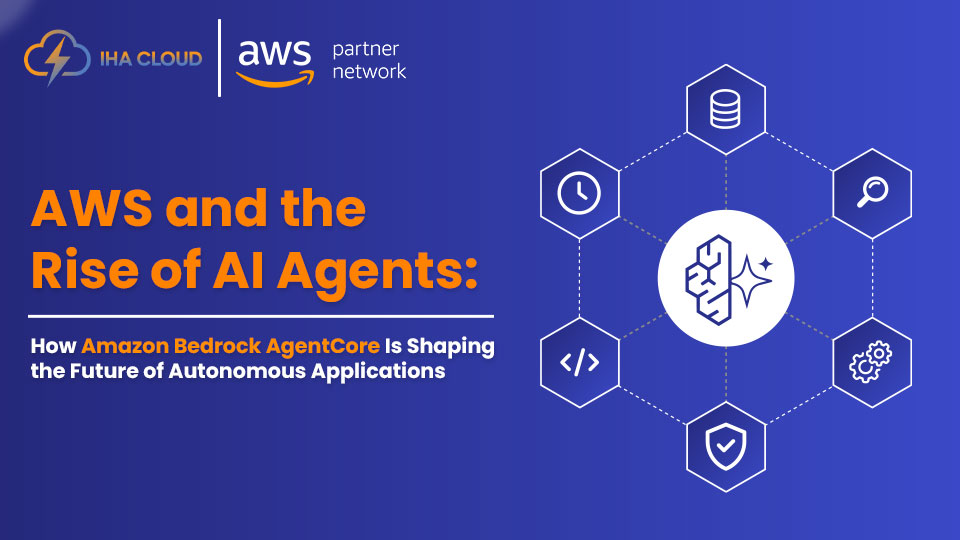
AWS and the Rise of AI Agents: How Amazon Bedrock AgentCore Is Shaping the Future of Autonomous Applications

Artificial Intelligence is rapidly evolving beyond simple automation and generative capabilities. The next major shift is agentic AI—systems that can plan, decide, and act independently to complete tasks. At the center of this transformation is Amazon Web Services (AWS), which is investing heavily in tools that enable developers to build and deploy intelligent, autonomous agents at scale. With innovations like Amazon Bedrock and its emerging AgentCore capabilities, AWS is laying the groundwork for a new era of applications that don’t just respond—but act. What Are AI Agents? AI agents are systems designed to: Unlike traditional automation scripts, AI agents can operate dynamically. For example: This shift marks the move from prompt-based AI to goal-driven AI systems. AWS’s Vision for Agentic AI AWS is positioning itself as a leader in the AI agent ecosystem by combining: Through Amazon Bedrock, AWS allows businesses to build generative AI applications using multiple models while maintaining enterprise-grade security. The addition of AgentCore-like capabilities introduces: This means developers can now build fully autonomous applications, not just chatbots. What Is Amazon Bedrock AgentCore? AgentCore is part of AWS’s broader effort to make AI agents production-ready. While still evolving, it focuses on enabling: 1. Agent Orchestration Manage complex workflows where multiple AI agents collaborate to complete tasks. 2. Tool Integration Agents can interact with APIs, databases, CRMs, and third-party services. 3. Memory & Context Awareness Persistent memory allows agents to retain context across interactions, improving decision-making. 4. Secure Execution Built on AWS infrastructure, ensuring enterprise-grade compliance and data protection. Key Benefits for Businesses 🔹 1. Automation Beyond Scripts AI agents can handle complex, multi-step workflows without manual intervention. 🔹 2. Improved Customer Experience Autonomous agents can resolve queries faster and more accurately. 🔹 3. Operational Efficiency Reduce workload on teams by delegating repetitive and decision-heavy tasks. 🔹 4. Scalability Built on AWS, these agents can scale across regions and workloads effortlessly. Real-World Use Cases 🛠️ DevOps Automation AI agents can monitor systems, detect anomalies, and trigger fixes automatically. 📞 Intelligent Contact Centers Autonomous agents can manage inbound calls, analyze intent, and provide resolutions—perfect for platforms like call tracking and cloud communication tools. 🛒 E-commerce Optimization Agents can manage inventory, personalize recommendations, and automate customer engagement. 🏥 Healthcare Workflows From appointment scheduling to patient interaction, AI agents can streamline operations. AWS vs Traditional AI Approaches Traditional AI AI Agents on AWS Reactive responses Proactive decision-making Single-task execution Multi-step workflows Limited integration Deep system connectivity Static logic Adaptive learning Challenges to Consider While promising, AI agents also bring challenges: AWS addresses many of these through built-in security, monitoring, and compliance tools. The Future of Autonomous Applications The rise of AI agents signals a major transformation in how software is built and used. With AWS leading innovation in this space, we can expect: In the coming years, AI agents will become as fundamental as APIs and cloud infrastructure. Conclusion Amazon Web Services is not just enabling AI—it is redefining how applications operate. With Amazon Bedrock and AgentCore capabilities, businesses can move from automation to true autonomy. The question is no longer if AI agents will transform industries—but how quickly businesses will adopt them.
AWS and the Rise of AI Agents: How Amazon Bedrock AgentCore Is Shaping the Future of Autonomous Applications Read More »

AWS Launches New AI Agent Platform to Transform Healthcare Innovation

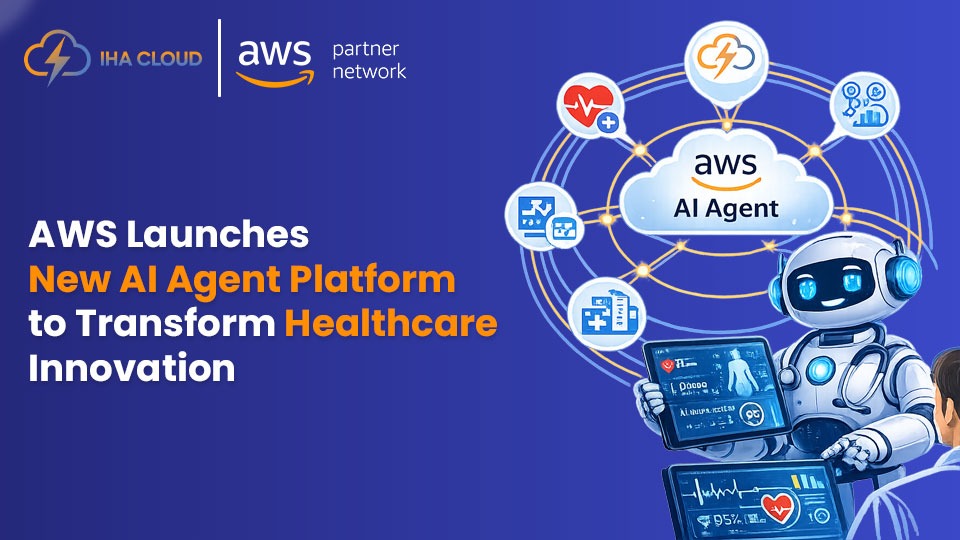
AWS Launches New AI Agent Platform to Transform Healthcare Innovation

The healthcare industry generates enormous amounts of data every day—from patient records and appointment requests to clinical notes and insurance documentation. While this data helps improve patient outcomes, it also creates a huge administrative burden for healthcare professionals. To address this challenge, Amazon Web Services (AWS) has introduced a new AI-powered platform called Amazon Connect Health, designed specifically to help healthcare organizations automate repetitive administrative tasks and improve patient access to care. The platform uses AI agents—intelligent software systems capable of performing tasks on behalf of humans—to streamline healthcare workflows, reduce manual work, and allow clinicians to focus more on patient care. The Growing Administrative Burden in Healthcare Healthcare professionals often spend a significant portion of their time on administrative tasks such as: These tasks are essential but time-consuming. In many cases, doctors and nurses spend nearly as much time on documentation as they do with patients. AWS aims to solve this problem by introducing AI agents that can automate routine tasks and support healthcare staff in real time. What Is Amazon Connect Health? Amazon Connect Health is an AI agent platform designed for healthcare providers. It integrates directly with existing healthcare systems such as Electronic Health Records (EHRs) to support both administrative and clinical workflows. The platform can help healthcare teams by: By automating these tasks, hospitals and clinics can reduce operational complexity and improve service efficiency. Key AI Agents Available on the Platform AWS has introduced several specialized AI agents within Amazon Connect Health to support healthcare workflows. 1. Patient Verification Agent This AI agent verifies patient identity in real time using information from electronic health records. It helps healthcare staff quickly confirm patient details and reduce call handling time. 2. Appointment Management Agent Patients can schedule appointments using natural language conversations with AI. The system can even check insurance eligibility and available time slots automatically. 3. Patient Insights Agent Before a patient visit, this AI agent compiles relevant medical history and important context for clinicians. This helps doctors walk into appointments better prepared. 4. Ambient Documentation Agent During consultations, the AI listens to conversations between doctors and patients and automatically generates clinical notes for review. 5. Medical Coding Agent After a visit, the AI can generate standardized medical codes used for billing and insurance processes. Together, these AI agents help streamline the entire patient care workflow—from scheduling to documentation. Built for Healthcare Compliance and Security Handling patient data requires strict compliance with healthcare regulations. AWS designed Amazon Connect Health to meet healthcare security requirements and maintain HIPAA eligibility, ensuring patient information remains protected. The platform also integrates with existing healthcare software systems so organizations can adopt AI capabilities without completely replacing their current infrastructure. AWS Expands Its Healthcare AI Ecosystem The launch of Amazon Connect Health is part of AWS’s broader strategy to expand its presence in the healthcare technology space. Over the years, AWS has introduced several healthcare-focused services, including: These services together create a powerful ecosystem that helps healthcare providers store, analyze, and use medical data more efficiently. Why AI Agents Could Transform Healthcare AI agents represent the next stage of enterprise AI. Instead of simply analyzing data, these systems can take action, automate workflows, and assist professionals in real time. In healthcare, this could lead to: Ultimately, the goal is simple: let technology handle routine tasks so healthcare professionals can focus on delivering better care. The Future of AI in Healthcare As AI continues to evolve, platforms like Amazon Connect Health could become an essential part of modern healthcare infrastructure. Hospitals and clinics around the world are exploring how AI can help them manage rising patient volumes while maintaining high-quality care. AI agents that automate scheduling, documentation, and patient communication could play a key role in solving these challenges. With the launch of Amazon Connect Health, AWS is taking another step toward building a smarter, AI-powered healthcare ecosystem.

AWS Launches New AI Agent Platform to Transform Healthcare Innovation Read More »

What is Amazon Q? Features, Benefits & Real-World Use Cases

What is Amazon Q? Features, Benefits & Real-World Use Cases

Artificial intelligence is no longer just a chatbot answering random questions. In 2026, AI is becoming deeply integrated into business systems, developer workflows, and enterprise knowledge bases. One of the most powerful tools leading this shift is Amazon Q — AWS’s generative AI assistant built specifically for organizations. But what exactly is Amazon Q? How does it work? And how can businesses actually use it in real-world scenarios? In this detailed guide, we’ll break down everything you need to know — features, benefits, and practical use cases — in simple, human language. What is Amazon Q? Amazon Q is a generative AI assistant developed by AWS (Amazon Web Services) that helps businesses, developers, and employees interact with their company data securely and intelligently. Unlike general AI tools, Amazon Q is designed for enterprise environments. It can: Think of it as an AI teammate that understands your organization’s knowledge, systems, and processes — while maintaining enterprise-grade security. How Amazon Q Works Amazon Q connects to your business data sources such as: It uses advanced large language models (LLMs) combined with secure retrieval systems to generate responses based on your actual company information — not just generic internet data. This means: Key Features of Amazon Q Let’s break down the most important features. 1. Enterprise Data Integration Amazon Q can connect to: It pulls relevant information and provides precise answers instead of generic summaries. Example:An employee asks, “What is our updated leave policy?”Amazon Q retrieves the latest HR document and responds instantly. 2. Developer Assistance Amazon Q supports developers inside AWS environments. It can: For developers working in AWS, this significantly reduces development time. 3. Secure by Design Security is one of the biggest concerns in enterprise AI. Amazon Q is built with AWS security standards: If an employee doesn’t have permission to view certain data, Amazon Q won’t show it either. 4. Natural Language Querying Business teams can ask questions in plain English instead of writing SQL queries or digging through dashboards. Example: Amazon Q translates the question into structured queries and delivers clear insights. 5. Customizable Workflows Organizations can tailor Amazon Q for specific tasks: It adapts to business needs rather than being a one-size-fits-all chatbot. Benefits of Amazon Q for Businesses Now let’s talk about why companies are adopting it. 1. Improved Productivity Employees spend hours searching for documents or asking colleagues for information. Amazon Q reduces that friction. Result: 2. Faster Development Cycles Developers get instant guidance on AWS architecture, security best practices, and code optimization. This reduces: 3. Better Decision-Making When leaders can query data in natural language, insights become more accessible. Instead of waiting for a report, they can ask:“Which marketing campaign had the highest ROI last month?” And get an immediate response. 4. Enhanced Knowledge Management As companies grow, knowledge becomes scattered. Amazon Q centralizes access to information across departments. It acts as a smart internal search engine powered by AI. 5. Enterprise-Level Security Unlike public AI tools, Amazon Q is built specifically for enterprise compliance and governance. This makes it suitable for: Real-World Use Cases of Amazon Q Let’s explore practical applications across industries. 1. IT & DevOps Teams Example:“Why is my EC2 instance failing health checks?”Amazon Q analyzes configuration and suggests possible fixes. 2. Customer Support Teams Support agents no longer need to manually search multiple systems. 3. HR & Internal Operations This reduces HR workload significantly. 4. Marketing & Sales Teams Example:“Which industries generated the most qualified leads this quarter?” 5. Executives & Leadership Decision-making becomes faster and data-driven. Amazon Q vs Traditional Enterprise Search Traditional enterprise search tools only retrieve documents.Amazon Q: It doesn’t just find data — it interprets it. Is Amazon Q Worth It? If your organization: Then Amazon Q can deliver significant value. For AWS-heavy organizations, it becomes a natural extension of your existing cloud ecosystem. Final Thoughts AI in business is shifting from experimental chatbots to structured, secure, and workflow-integrated assistants. Amazon Q represents that transition. It’s not just another AI tool. It’s an enterprise-ready assistant built to: As companies continue adopting generative AI, solutions like Amazon Q will likely become a core part of digital transformation strategies. Frequently Asked Questions

What is Amazon Q? Features, Benefits & Real-World Use Cases Read More »