Artificial Intelligence is rapidly evolving beyond simple automation and generative capabilities. The next major shift is agentic AI—systems that can plan, decide, and act independently to complete tasks.
At the center of this transformation is Amazon Web Services (AWS), which is investing heavily in tools that enable developers to build and deploy intelligent, autonomous agents at scale. With innovations like Amazon Bedrock and its emerging AgentCore capabilities, AWS is laying the groundwork for a new era of applications that don’t just respond—but act.
What Are AI Agents?
AI agents are systems designed to:
- Understand goals and context
- Make decisions based on data
- Execute actions across systems
- Continuously learn and improve
Unlike traditional automation scripts, AI agents can operate dynamically. For example:
- A customer support agent resolving queries end-to-end
- A DevOps agent detecting and fixing infrastructure issues
- A sales assistant managing leads and follow-ups
This shift marks the move from prompt-based AI to goal-driven AI systems.
AWS’s Vision for Agentic AI
AWS is positioning itself as a leader in the AI agent ecosystem by combining:
- Foundation models
- Secure cloud infrastructure
- Scalable orchestration tools
Through Amazon Bedrock, AWS allows businesses to build generative AI applications using multiple models while maintaining enterprise-grade security.
The addition of AgentCore-like capabilities introduces:
- Multi-step task execution
- Tool and API integration
- Memory and context handling
- Workflow orchestration
This means developers can now build fully autonomous applications, not just chatbots.
What Is Amazon Bedrock AgentCore?
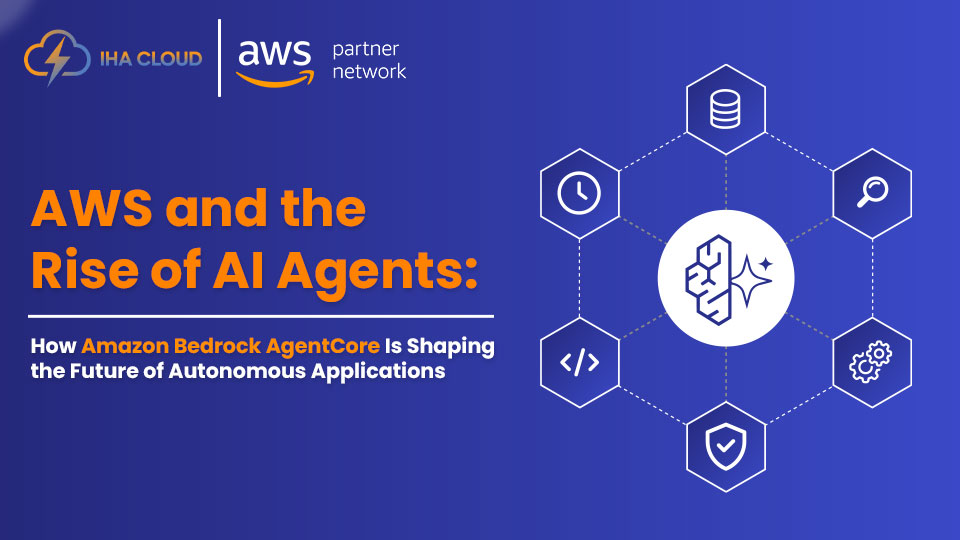
AgentCore is part of AWS’s broader effort to make AI agents production-ready. While still evolving, it focuses on enabling:
1. Agent Orchestration
Manage complex workflows where multiple AI agents collaborate to complete tasks.
2. Tool Integration
Agents can interact with APIs, databases, CRMs, and third-party services.
3. Memory & Context Awareness
Persistent memory allows agents to retain context across interactions, improving decision-making.
4. Secure Execution
Built on AWS infrastructure, ensuring enterprise-grade compliance and data protection.
Key Benefits for Businesses
🔹 1. Automation Beyond Scripts
AI agents can handle complex, multi-step workflows without manual intervention.
🔹 2. Improved Customer Experience
Autonomous agents can resolve queries faster and more accurately.
🔹 3. Operational Efficiency
Reduce workload on teams by delegating repetitive and decision-heavy tasks.
🔹 4. Scalability
Built on AWS, these agents can scale across regions and workloads effortlessly.
Real-World Use Cases
🛠️ DevOps Automation
AI agents can monitor systems, detect anomalies, and trigger fixes automatically.
📞 Intelligent Contact Centers
Autonomous agents can manage inbound calls, analyze intent, and provide resolutions—perfect for platforms like call tracking and cloud communication tools.
🛒 E-commerce Optimization
Agents can manage inventory, personalize recommendations, and automate customer engagement.
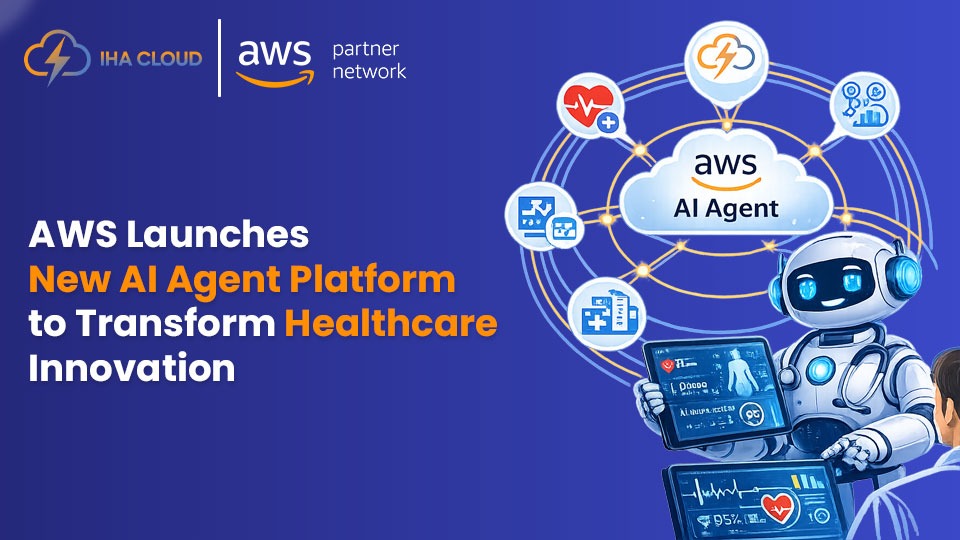
🏥 Healthcare Workflows
From appointment scheduling to patient interaction, AI agents can streamline operations.
AWS vs Traditional AI Approaches
| Traditional AI | AI Agents on AWS |
|---|---|
| Reactive responses | Proactive decision-making |
| Single-task execution | Multi-step workflows |
| Limited integration | Deep system connectivity |
| Static logic | Adaptive learning |
Challenges to Consider
While promising, AI agents also bring challenges:
- Complexity: Designing autonomous workflows requires careful planning
- Cost: Running large-scale AI agents can increase cloud costs
- Governance: Ensuring ethical and controlled decision-making
- Security: Managing access to sensitive systems
AWS addresses many of these through built-in security, monitoring, and compliance tools.
The Future of Autonomous Applications
The rise of AI agents signals a major transformation in how software is built and used. With AWS leading innovation in this space, we can expect:
- AI-powered applications that run entire business processes
- Reduced human intervention in routine operations
- Smarter, self-improving systems
- Faster innovation cycles
In the coming years, AI agents will become as fundamental as APIs and cloud infrastructure.
Conclusion
Amazon Web Services is not just enabling AI—it is redefining how applications operate. With Amazon Bedrock and AgentCore capabilities, businesses can move from automation to true autonomy.
The question is no longer if AI agents will transform industries—but how quickly businesses will adopt them.